
Food Insecurity
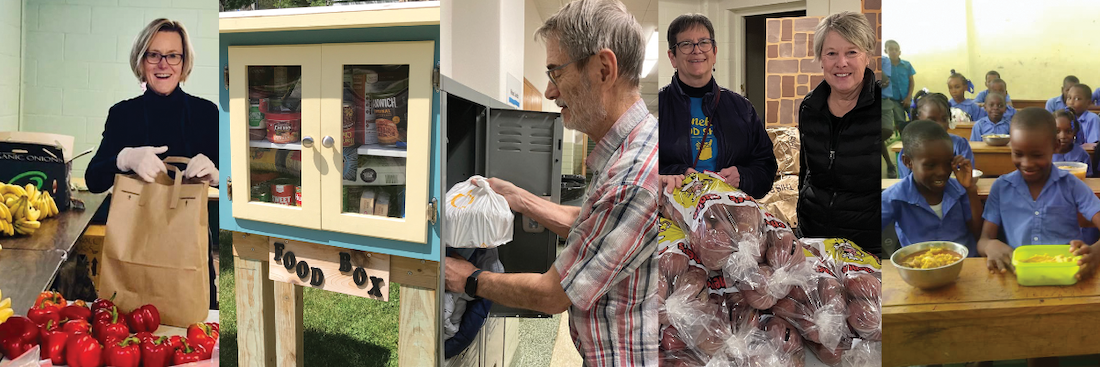
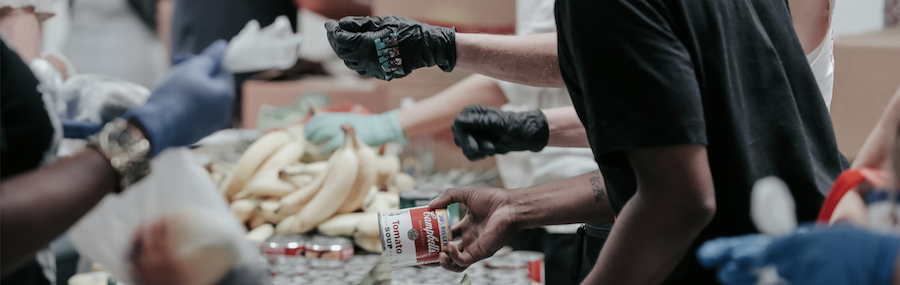
As you probably know, the passage of the large budget bill (known to Republicans as "The One Big Beautiful Bill") in July 2025 resulted in significant cuts to the food program known as SNAP (Supplemental Nutrition Assistance Program). It is estimated that five million Americans have lost food benefits in the past 15 months. Possibly because of these cuts, the Food Box on the sidewalk in front of Grace Church has recently seen increased use. The box is often full on Sunday, when parishioners make contributions, but is often empty by the end of the week. If you come to church on a day other than Sunday, please bring an item of food for the box.
Truly I tell you, just as you did it to one of the least of these who are members of my family, you did it to me. (Matthew 25:40)
Your Stake in God's Dream
 Friends,
 Last Sunday, I preached about the defiant, loving act of investing your time, energy, heart, and money in a faith community.
In the midst of all the catastrophes happening around us, your being here, your involvement, your financial gifts, are all a stake in God’s dream — God's dream of a wedding feast where everyday people are all invited, where every tear is wiped away, where the lion can lay down with the lamb and that lamb doesn’t have to be afraid of being eaten, where the earth is healed and restored, where death is overcome with God’s power of love.
You can listen to the sermon here.
Here's what you'll find below:
A statement from the Presiding Bishop about public execution
With love,
Susan+
A Message from Presiding Bishop Sean Rowe
"The Episcopal Church has long formally opposed the death penalty,
and more recently we have called for an immediate moratorium on its use,"
Rowe said in a statement.
"The idea of live-streaming a firing squad execution is reprehensible in the extreme
and will cause moral injury to everyone involved.
We need to ask ourselves who we have become as a nation
when senior officials decide to make a spectacle of state-sponsored violence."
Read more
Jesus Changed His Mind
 Friends,
Yesterday I preached on a difficult text in the Gospel of Matthew, in which Jesus responds initially responds to a woman pleading for his help...with insults.
Thanks to her persistent, dignified, defiant conversation, he seems to change his mind, not just about her, but about the mission he believes God has given him. You can watch the sermon here.
Wait. Did Jesus just... change his mind?
I believe God wants so much for us to drop our scorn that Jesus learns this lesson in public. Jesus learns this lesson in public so that we can see what it looks like to repent, to change our minds, to see the dignity of the human being in front of us whom we have been taught to look down on.
My challenge (challenge!) to you this week is to spend a little time in conversation with God. Ask God to show you where you are like Jesus in this story. Where it’s time to change your mind, soften your heart, see God’s presence in those whom you’d rather not love. And, ask God where you are like this mother in the story, pleading to protect someone or something you love. Ask God to show you where you can lean on the Canaanite mother’s courage, where you can use your persistent, dignified, defiant voice to invite someone in power to change their mind for the sake of God’s love for the whole world.
Here's a little extra inspiration for you, from the Singing Resistance at Brandi Carlisle's Minneapolis concert back in February.
[ video source, https://www.facebook.com/reel/1968157390435530 ]
[ photo credit ]
Get Out the Vote
 [ In a world that seems increasingly chaotic and broken, many of us feel helpless and afraid. We may question what we can do to make a difference. To build collective courage, in this space we will share examples of how individual members of GEC are practicing the way of Jesus, in private action or in the public arena. How might you find inspiration and hope in the small steps others are taking? ]
As we approach the midterm elections you may have heard some discussion around vote tampering and voting interference. Massive in-person voter turn out is one way to mitigate the threat. Simon Rosenberg of the Hopium Chronicles explains why.
According to him, voting early will get you off the Get Out the Vote (GOTV) rolls. This gives a campaign the opportunity to more quickly determine who they don’t need to contact and it allows them more time to focus on people who haven’t voted yet. If you’re off the rolls you should stop getting calls and door knocks and the campaign can focus on reaching lower propensity voters. This is important, especially in a midterm election, as there are more episodic voters who aren’t as sure they are going to vote compared to a presidential year. This helps the GOTV folks to encourage and increase overall voter turnout.
Early in-person voting also gives lower propensity voters an chance to see growing momentum for the election potentially increasing the likelihood that they will actually vote.
So, if you’re looking for an easy way to bring your faith and values into the public arena and help increase turnout, get out and vote early and in-person. (Of course, that may not be an option for everyone so the most important thing is to vote no matter how you do it.)
[ photo credit ]
Our God is not a Binary God
 Friends,
On Sunday, I recapped this scene from Derry Girls as a way into the conflict at the heart of the reading from Genesis. In that story, two brothers, Jacob and Esau, begin a foundational conflict that stretches into centuries of violence. But our God is not a binary God; Jesus disrupted binaries in his teaching, and throughout Scripture God keeps on upsetting dualities with God’s Spirit, with God’s love, with God’s invitation to find a third way. You can listen to the sermon here.
On Sunday, we also blessed Sheila Foster in gratitude for her long years of ministry with us, and sent her into her next chapter with the gift of a quilt and a sung blessing from ECMN camps. It was a holy, hard day. Thank you to everyone who came, shared memories, and otherwise lent their hearts and energy to mark this transition.
Friends,
On Sunday, I recapped this scene from Derry Girls as a way into the conflict at the heart of the reading from Genesis. In that story, two brothers, Jacob and Esau, begin a foundational conflict that stretches into centuries of violence. But our God is not a binary God; Jesus disrupted binaries in his teaching, and throughout Scripture God keeps on upsetting dualities with God’s Spirit, with God’s love, with God’s invitation to find a third way. You can listen to the sermon here.
On Sunday, we also blessed Sheila Foster in gratitude for her long years of ministry with us, and sent her into her next chapter with the gift of a quilt and a sung blessing from ECMN camps. It was a holy, hard day. Thank you to everyone who came, shared memories, and otherwise lent their hearts and energy to mark this transition.With Love,
Susan+
[ image credit ]
In the Midst of Conflict, Do Not Fear
 Friends,
 On Sunday, the Rev. Todd Lippert of ISAIAH MN spoke powerfully about how people of faith can speak truth and practice the way of Jesus in the midst of rising hate and authoritarianism. “May we take heart and be of good courage in a time when our neighbors need a church that is clear that we are Christ’s body for the world now." Watch the sermon here.
Here's what else you'll find below:
- Details about joining others from Grace at this Sunday's Pride Parade.
- An art reflection apropos to Pride
- Queer Faith: Books
With love,
Susan+
————————————————————————————————
Pride at Grace!
Join us this Sunday for worship, when the Rev. Lydia Gajdel will be our preacher. Or, join in the Pride Parade! Members of Grace will again be joining local Episcopal congregations to march in the Minneapolis pride parade. Bring your walking shoes and be ready to wave, hand out fans, and have a good time! The parade begins at 11AM on June 28th. Let Megan know you would like to join to get the details: megfetterman@gmail.com
————————————————————————————————
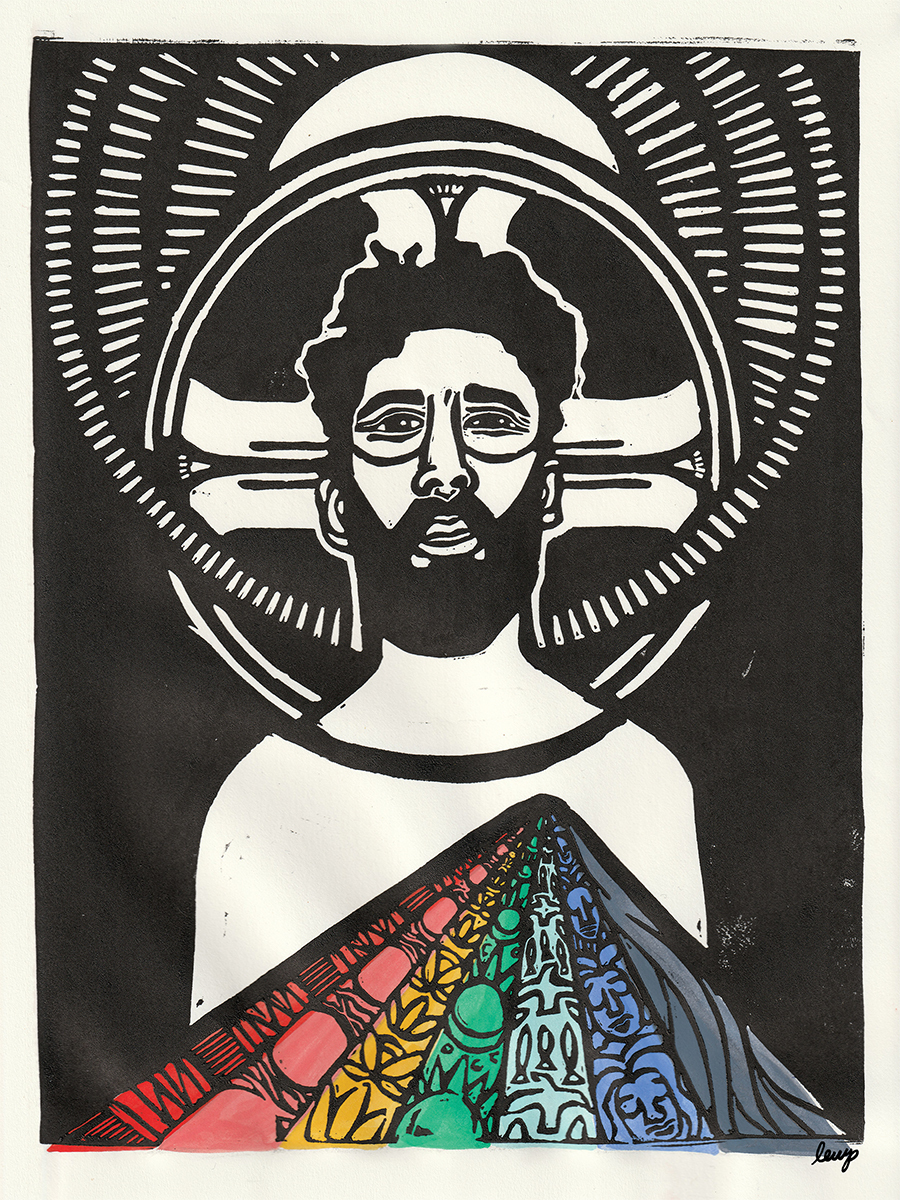
Through Him, All Things
by Lauren Wright Pittman, Block print with oil-based ink over gouache painting
As I created this piece, I thought about a prism. I remember the first time I used this seemingly magical, transparent stone. I held it to the light, which I could not see, and to my surprise the light was broken down into the vibrant colors of a rainbow. It was natural for me to think the stone was creating something that wasn’t there, but this medium revealed the complex truth that light is in fact made up of all the colors in existence.
In my image, Jesus is a prism. The light that is life that comes from the Creator shines through Jesus, and it is through him that we can see the fullness and beauty of who God is. It is through him that all of Creation came into being. I decided to paint the colors of the rainbow in the order I learned as a child: ROYGBIV. It was when picking paints that I realized there are seven colors in a simplified rainbow, and there are also seven days of Creation. In this block carving, each of the days of Creation is referenced through simplified patterning in each of the colors of the rainbow. It is through Christ that all things came to being, and it is through him that we experience the abounding saturation of God, who chose to dwell among us.
Like light through a prism, the glory of God refracts through the multifaceted life of each and every human being, creating a picture of the divine that is as varied and beautiful as there are colors in existence. In this image, the rainbow also echoes the full spectrum of humanity and celebrates the image of God that is present—not only in every human, but in every facet of Creation. —The Rev. Lauren Wright Pittman, A Sanctified Art
———————————————————————————————
Queer Faith: Books for Pride
Proclaim! Sharing Words, Living Examples, Changing Lives, by the Rev. Marcus Halley
An exploration of the Episcopal liturgy from a Black, queer, millennial perspective with an eye toward proclamation and justice. Find it here.
Conversion Therapy Dropout: A Queer Story of Faith and Belonging, by Timothy Schraeder Rodriguez
A gay Christian's behind-the-scenes account of evangelical megachurches and eight years in conversion therapy before finding wholeness and authenticity. Find it here.
In the Margins: A Transgender Man's Journey with Scripture, by Shannon T. L. Kearns
Moving the conversation beyond transgender inclusion to demonstrate the unique and vital theological insights transgender Christians can provide the church. Find it here.
Outside the Lines: How Embracing Queerness Will Transform Your Faith, by Mihee Kim-Kort
Mihee Kim-Kort is a wife, a mom, and a Presbyterian minister. And she's queer. As she became aware of her queer sexuality, Mihee wondered what that meant for her spirituality. But instead of pushing her away from God, her queerness has brought her closer to Jesus and taught her how to love better. Find it here.
Transforming: The Bible and the Lives of Transgender Christians, by Austen Hartke.
Transforming deftly weaves ancient and modern stories that will change the way readers think about gender, the Bible, and the faith to which Jesus calls us. Hartke helps readers visualize a more inclusive Christianity, equipping them with the language, understanding, confidence, and tools to change both the church and the world. Find it here.
[ photo credit ]
Not Extraordinary, But Available
 Friends,
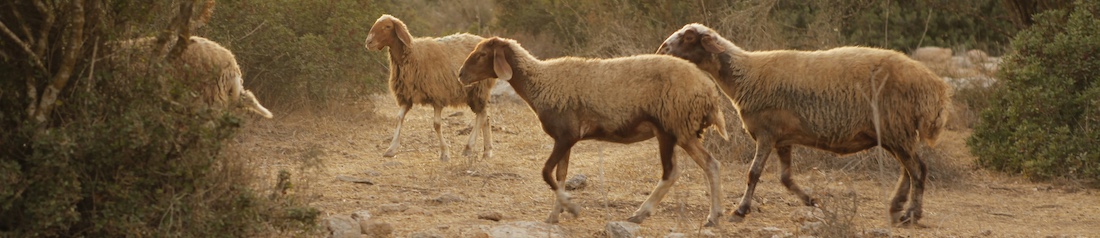
 On Sunday, I preached about the 'lost sheep' Jesus spoke about as he commissioned the twelve disciples. Jesus drew on imagery from the Hebrew bible that spoke of sheep who had been exploited and abandoned by their shepherds. When our political leaders leave us feeling harassed and helpless, we, like the twelve disciples, can join in Jesus' work of feeding the hungry, healing the sick, and welcoming the stranger. You can listen here.
Here's what else you'll find below:
A video reflection shared by Marion Larson
With love,
Susan+
———————————————————————————————
The Trouble with Church
From Marion Larson
Peter Enns, theologian and scholar of the Hebrew Scriptures, is a former evangelical whose spiritual journey has brought him to the Episcopal Church. I follow him on Substack, where he often posts short videos about various issues related to questions and struggles that many Christians face. The experiences with church that he discusses in this video are ones that I definitely can relate to—both from my own evangelical past and my experiences at Grace. —Marion
[ Watch the 6-minute post. ]
[ photo credit ]
Jesus, When Interrupted
 Friends,
 On Sunday, I preached about how the book of Genesis treats Sarai, how Jesus treated the people who interrupted him, and how followers of Jesus' way of love are called to live with mercy. Listen here.
With love,
Susan+
[ photo credit ]
More on Voting Rights
 [ In a world that seems increasingly chaotic and broken, many of us feel helpless and afraid. We may question what we can do to make a difference. To build collective courage, in this space we will share examples of how individual members of GEC are practicing the way of Jesus, in private action or in the public arena. How might you find inspiration and hope in the small steps others are taking? ]
We are living in an era where there are efforts to take voting rights away from citizens. This is an issue of social justice.
It's never too early to prepare to exercise your right to vote! Can you believe the November elections are now just under 5 months away? The iwllvote.com website gives information on a) checking the status of your ballot b) checking to find out if you are registered to vote c) registering to vote d) voting by mail e) voting while living abroad and f) other general information about voting.
The best time to prepare to vote was yesterday. The second best time is today!
Check out the website: iwillvote.com
You can also call the Minnesota voter hotline at 1 (833) 335-8683.
Put your faith into action and VOTE!!
-submitted by Joe L.
[ photo credit ]
The Trinity by way of Grapes
 Friends,
 Dave Larson's sermon on Trinity Sunday invited us into the Trinity via toddler speech development, grapes, and witnessing and responding in relationship. I commend it to you!
With love,
Susan+
Mayday puppet show brings a defiant call for healing post-surge
If you, like me, didn't make it to the Mayday parade, don't miss this video recapping the puppet show that day. (Thanks to Amy Chatelaine for this tip.)
Suscipe, St. Ignatius of Loyola
Take, Lord, and receive all my liberty,
my memory, my understanding,
and my entire will,
All I have and call my own.
You have given all to me.
To you, Lord, I return it.
Everything is yours; do with it what you will.
Give me only your love and your grace,
that is enough for me.
Learn more about the Suscipe here.
[ photo credit ]
Voting Rights
 [In a world that seems increasingly chaotic and broken, many of us feel helpless and afraid. We may question what we can do to make a difference. To build collective courage, in this space we will share examples of how individual members of GEC are practicing the way of Jesus, in private action or in the public arena. How might you find inspiration and hope in the small steps others are taking?]
Voting rights are under attack!
The All Roads Lead to South website says:
"Our parents and grandparents marched, organized, bled, and won. The Voting Rights Act was theirs. The fight to keep it is ours."
"Right now, state by state, that law is being dismantled. We know that we cannot fight the same battles the same way. New times demand new tactics — economic pressure, political organizing, community action, culture, and faith. But we know what we know: organizing works. And we have unfinished business."
Check out their website at allroadsleadtothesouth.org
The site covers ways to volunteer, organize locally, stay updated, and check your own voting status all in the effort to preserve voting rights.
—Joe Lex
[ photo credit ]
A Note from Huldah

Friends,
Thank you, friends, for coming together in worship this weekend -- on Saturday to sing our friend Steve Spencer back to God, and on Sunday to celebrate the feast of Pentecost, when we baptized Eleanor Joan.
On Sunday we also blessed Huldah Niles as she takes her next steps toward the diaconate. Huldah's internship time with us is over, and she'll take a summer of rest before her assignment at St. David's in Minnetonka officially begins. We'll keep you posted about opportunities to join in her ordination service as we get the news!
With love,
Susan+
A Note from Huldah Niles, Deacon Candidate
Dear beloved people of Grace Episcopal Church,
Thank you from the bottom of my heart for welcoming me into your beautiful community this past year. What a gift it has been to pray, learn, organize, laugh, worship, and dream alongside you all.
A very special thank you to Grace’s incredible Rector, Rev. Susan Daughtry, and to the amazing staff: Adam Reinwald, Sheila Foster, and Randy Bauer. It has been such a joy to work with loving, competent, and deeply kind people who answered my endless questions with patience and always made me feel that my voice mattered. I will genuinely miss our weekly staff meetings.
I also want to thank my wonderful Companion Team: Dick Justman, Jill Swanson, and Kurt Hall. Thank you for walking with me so faithfully during my time at Grace and for helping shape this important season of discernment and formation.
And to the Mission Team (formerly Faith in Action): thank you for welcoming me as a leader and collaborator in this work of outreach and justice. It was a true joy to help bring people to the table, build relationships, and discern next steps together. I remain deeply inspired by your compassion, creativity, and commitment to loving your neighbors well.
To the entire Grace community: thank you for taking the time to talk with me, share your stories, ask hard questions, and build authentic relationships. Those conversations mattered deeply to me and will continue to shape the kind of Deacon I hope to become.
I have now completed my nine-month internship with you all and have officially transitioned from Postulant to Candidate for the Diaconate. God willing and the people consenting, I will be ordained a Deacon in the Episcopal Church in Minnesota this fall. Once an ordination date is finalized, I will absolutely share it with all of you. I would love to see you there!
As Susan mentioned on Sunday, once ordained, Bishop Loya has assigned me to serve as the Deacon at St. David’s Episcopal Church in Minnetonka. While saying goodbye to Grace is certainly bittersweet, I also feel a deep sense of peace and excitement about this next call.
I also plan to continue organizing with Isaiah, and I sincerely hope to see many Grace folks at future Isaiah meetings, trainings, and public actions. The work of justice, compassion, and holy troublemaking continues!
Please know you will always have a friend in Minnetonka who is ready for coffee, conversation, organizing, laughter, and some good trouble.
Embrace the rainbow!
With love and gratitude,
Huldah Niles
What Do We Do When the World is Burning
 Friends,
 On Sunday, the Rev. Matthew Johnson preached about his experience of traveling to Bigonet, Haiti, where our congregation has a partnership. You can listen to the sermon here.
Here's what else you'll find below:
A book recommendation from Jane Peck.
With love,
Susan+
——————————————————————————————
Book Recommendation
From Grace Member Jane Peck
I thoroughly recommend Choctaw Native Bishop Steven Charleston’s book, “We Survived the End of the World, lessons from Native America on apocalypse and hope.” Though written in 2023 it is more timely in 2026 as we in the majority culture experience occupation and real peril. Who better to teach us about managing occupation and mass threat than the native Americans?
The bishop tells true stories of four tribal prophets who began strong and hopeful movements against occupation and genocide. The stories come from the Seneca, Shawnee, Paiute, and Nez Perce tribes. The bishop then pulls lessons for us all from each story as well as summarizing a path forward. Be prepared for inspiration !
Steven Charleston, a member of the Choctaw nation of Oklahoma, was the Episcopal Bishop of Alaska, and dean of the Episcopal Divinity School. has has authored many books.
May Day
 [ In a world that seems increasingly chaotic and broken, many of us feel helpless and afraid. We may question what we can do to make a difference. To build collective courage, in this space we will share examples of how individual members of GEC are practicing the way of Jesus, in private action or in the public arena. How might you find inspiration and hope in the small steps others are taking? ]
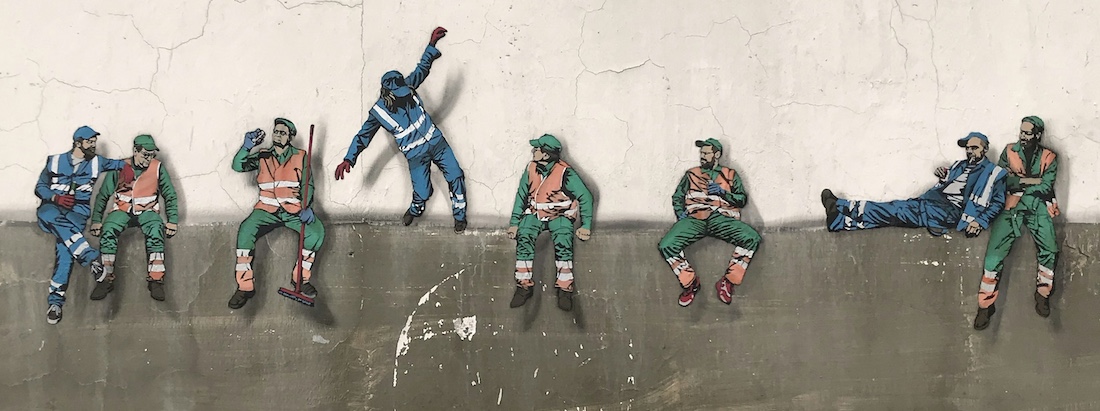
It’s Workers Over Billionaires - On May 1, 2026, workers, students, and families rally, march, and take action across the country to demand a nation that puts workers over billionaires, with many refusing business as usual through No School. No Work. No Shopping.
For more information go to maydaystrong.org
Submitted by Joe Lex
[ photo credit ]
Putting Values into Action
 [ In a world that seems increasingly chaotic and broken, many of us feel helpless and afraid. We may question what we can do to make a difference. To build collective courage, in this space we will share examples of how individual members of GEC are practicing the way of Jesus, in private action or in the public arena. How might you find inspiration and hope in the small steps others are taking? ]
Many Minnesotans of faith attended the No Kings 3 rally at the state capitol this past Saturday as an opportunity to put their values into action. Participants including Christians, Muslims, and Jews attended the event as a moral commitment to justice, compassion, and the protection of democratic values over authoritarianism. Their actions mirrored their religious beliefs and showed their objection to Christian Nationalism.
The next day, on Palm Sunday, many Christians returned to the capitol to take a stand against the avarice, inhumanity, and brutality of the current administration thus recalling Jesus humbly entering Jerusalem on the original Palm Sunday as a response to the corruption of the Roman Empire.
Coming Soon: General Strike on May 1
-submitted by Joe L
[ photo credit ]
Marching in the Name of the Passover, Easter God
 Friends,
 On Sunday, I preached about the first Palm Sunday, and the ways the defiant story of the Passover made Jesus' procession into occupied Jerusalem a dangerous, provocative event. Matthew's Gospel says that "the whole city was in turmoil" as Jesus entered, and then tossed those exploiting the people out of the Temple, and healed the sick. "Who is this?!?," the people of Jerusalem asked?
Who is this? Who do we say Jesus is?
It's an urgent time for the church to be able to speak clearly about who Jesus is. As voices around us claim that Jesus is a figure of judgment who will ride in on a white battle-horse with an army of avenging angels, we proclaim a Gospel that is actually Good News.
Listen to the rest of the sermon here.
With love,
Susan+
[ photo credit ]
Hope and Despair, Together
 Friends,
There was a line in Lydia’s sermon last week that really hit home for me. Lydia said, “We are sent forth in the name of Christ, back out into the world of mundane to-do lists, blatant fascism, and joyful birthday parties.”
Holding all of it—the daily details, the heartbreak and fear, and the joy—is the human condition. And God joins us in it: "Our God cannot help but feel his way through, even in the most divine moments. Hope and despair are not mutually exclusive.”
Listen to the rest of Lydia's sermon here.
With love,
Susan+
[ photo credit ]
Joining God's Work of Healing
 Friends,
 In Sunday's sermon, I preached about a town filled with fear. When Jesus arrives and gives sight to a man who had been blind his whole life, instead of joining the man in celebration, they react with suspicion and throw him out. The way they respond to this man, and the miracle he receives, is a glimpse into what fear does at the societal scale.
All of us have been living in this story in recent months. We’ve been a community wracked with fear that has to choose how to relate to their most vulnerable neighbor. The Twin Cities had to decide: Would we sacrifice the immigrant neighbors among us in order to avoid a military occupation?
Read the rest here.
With love,
Susan+
[ photo credit ]
Seeing Through the Filter
 Beloved in Christ,
One delusion of modern life is the assumption that it is possible to see the world objectively, and without bias. Our brains take in about eleven million bits of information per second, and our conscious minds can only process about fifty bits. That’s an enormous gap, and our minds close that gap by using unconscious filters to select what to see and predict what is likely to happen. Those filters are made of what we believe or value most. So, it turns out, it’s not so much that seeing is believing, but rather we have to believe in order to see.
Following Jesus is about learning to see through the filter of God’s sacrificial, neighborly love. In this Sunday’s dense and complex gospel reading, Jesus is helping us to understand that true, healing vision is only found when we let go of faith in ourselves, and practice clinging entirely to God’s power.
Learning to see through the eyes of Jesus will give us a bias for love. It will develop a filter for generosity in a world of rancor and scorn, shine a warm and healing light on the poor and those pushed aside in a world where might makes right. Our spiritual work in every moment is to ask Jesus to touch the scales of hard-hearted selfishness, bitterness, and fear that ever blind us, and put on the lens of love, and the filter of justice. Through daily prayer, sharing life with each other, drinking deeply from the scriptures, and encountering Jesus in sacrament, God’s vision for a world healed by love comes into sharper focus, and we are set free to extend that healing in every moment of our living, in a world imprisoned by its destructive blindness.
Grace and Peace,
The Right Reverend Craig Loya
Bishop X
Episcopal Church in Minnesota
[ photo credit ]
The Hot, Parched Wilderness

From Bishop Loya
Beloved in Christ,
Last summer, a bike trip with my daughter through Iowa coincided with a brutal heat wave. At one point, we found ourselves in the middle of a long stretch between towns, running low on water. There was only one way for us to get out of the heat and find water, to keep going. We eventually reached our destination, exhausted, hot, and full of complaint. Then, we found an ice cream place, ordered water and the largest root beer floats they could make, and consumed them greedily in the glorious air conditioning. It was spiritually transcendent, and made the hot trip back much, much easier.
In the Old Testament reading for this Sunday, God’s people are also in the middle of a long and hot journey in the desert wilderness. There is no water, they cry out in complaint to Moses, who turns around and cries out in complaint to God. God directs him to strike a rock with his staff, and water inconceivably comes running out, no doubt as sweet as our root beer floats in Iowa.
The world feels every bit a hot and parched wilderness right now. The most powerful in our nation and the world are recklessly enforcing a narrow vision at home, and now in the already embattled Middle East, as bombs wreak death and destruction through the region with little sense of how or when it will all end, and the potential for widening violence alarmingly high.
In such a moment, we are called to stand in the long biblical tradition of lament, and cry out to God for justice, for peace, and for healing. The only way we can get out of the heat and find water is to keep going, seeking with our whole being the living water that God alone can offer. And then, fortified by that water, we are to pedal through the world with the same elated energy as my daughter and I did on our root beer fueled return trip through Iowa’s scorching cornfields. We are to pedal calling on our elected leaders to end the state sanctioned campaigns of violence, around the world, and in our own streets. We are to pedal in calling for accountability for those who recklessly disregard the basic constitutional rule of law. We are to pedal by doing every small thing we can do in front of us with the greatest imaginable love.
Make no mistake, beloved, the God we meet around the altar each and every week can provide the sweetest water out of the hardest surfaces, and the most impossible circumstances. May our life together always be about joining God in striking every hard, calcified, and brittle barrier, until the healing medicine of love flows unstoppably over the whole parched and painful creation.
Grace and Peace,
The Right Reverend Craig Loya
Bishop X
Episcopal Church in Minnesota
[ photo credit ]
Learning to Float
 Friends,
 In Sunday's sermon, I asked you what it was like as you were learning to float.
You shared your experiences: terror, panic, and fear. And after you learned: wonder, magic, freedom.
Trusting God is a little like that. The days ahead, in this extraordinarily volatile political time, will give us more and more opportunities to trust God as we practice Jesus' way of love. You can listen to the sermon here.
With love,
Susan+
[ photo credit ]
Thinking About Voting
 [In a world that seems increasingly chaotic and broken, many of us feel helpless and afraid. We may question what we can do to make a difference. To build collective courage, in this space we will share examples of how individual members of GEC are practicing the way of Jesus, in private action or in the public arena. How might you find inspiration and hope in the small steps others are taking?]
"Not voting is not a protest. It is a surrender." - Keith Ellison, Minnesota Attorney General
"Voting is a great way to put your faith and values into action. It is never too early to start making your plan to vote." -submitted by Joe L.
[ photo credit ]
What Will Recovery Look Like?
 Friends,
 Yesterday, Dave Larson preached a powerful sermon that wrestled with his 'childhood preachers' and their focus on sin. Unpacking the Genesis story of temptation and the story of Jesus' temptation in the wilderness, Dave shared that "this isn't a story about sin. It's a story about love." Listen here.
That love is real good news - not just for our relationship with God but for our relationship with our neighbors. So many of us have been praying, demonstrating, feeding and protecting our neighbors, and joining in other forms of political action in response to Operation Metro Surge. That operation, which purports to be over, has definitely not actually ended: ICE, CBP, and other federal organizations have moved operations into the suburbs, changed tactics, and gone underground compared to a few weeks ago. The news media may have moved on, but our neighbors and friends who felt targeted before would be right to wonder if they are yet safe to go to work, to the grocery store, to doctor's appointments. Volunteers are wondering when and how to taper off.
As much as we'd like the situation to be definitively over, there is going to be a 'long tail' of residual effects, compounded by the lost trust in official communications.
As those impacts linger, what will it look like for our city and our state to 'recover?' All of us will be asking this question in the coming days.
I'd love to hear from you on this question: What does healing (or even just getting back to normal) look like when the harm might be continuing in a new form? As individuals, as a congregation, as a wider civic community? What resources do we need to tap into to practice the way of Jesus in this season?
If you have thoughts to share, hit 'reply' and let me know. If you give me permission to share your words, I'll include in next week's email.
With love,
Susan+
[ photo credit ]
Lent 2026 at Grace: The Welcoming Prayer
The Welcoming Prayer is an embodied, contemplative practice that helps us enter the present moment, in the presence of God.
Here's what it boils down to:
I let go of my desire
for security, affection, and control,
and I embrace this moment just as it is.
As we navigate the extraordinary challenges of these days in Minnesota and across the country, the Welcoming Prayer can be a powerful tool to help us ground ourselves in God’s loving embrace so that we can respond, rather than react, to the instability and uncertainty around us.
Once you’ve learned the practice, it can be a tool to connect with your body, your soul, and your faith anywhere you go, in any moment, no matter what you’re feeling. Find out more.
A Most Uncomfortable Prayer
 Friends,
 The Welcoming Prayer often evokes strong feelings in me, and likely many of you.
Here's what it boils down to:
I let go of my desire
for security, affection, and control,
and I embrace this moment just as it is.
Woof. Frankly: Security, affection, and control are things I'd prefer to hang on to all the time. This prayer is uncomfortable.
We all want to feel safe, to feel loved, and to feel like we have some control over our lives. We take all kinds of steps in pursuit -- so much so that we can easily find ourselves chasing security or affection or control or all three in destructive ways. As the Rev. Anna Broadbent-Evelyn said in her homily yesterday: sometimes things get in the way of our relationship with God, our source, and we need to shuv, repent, return to God.
The Welcoming Prayer grows out of the deep roots of the Christian contemplative tradition, inviting us to become more aware of the Holy Spirit's work in us in the midst of fear, loneliness, and loss of control. Letting go of the ways we chase those false idols, we can say yes to following the Way of Jesus.
In this season of Lent, I invite you to try on the Welcoming Prayer. It isn't comfortable; it is a way to have an honest connection with God in the midst of the incredible instability of life in these times in this place. Get all the information you need and register now here.
With love,
Susan+
Transfiguration Drama!
Last Sunday, members of Grace of all ages presented a drama for us — bringing life to the story of the Transfiguration. You can watch here.
A big thank-you to all those who participated, especially Liz Athorn and Louise Robinson who pulled it all together!
Precinct Caucus Night

[ In a world that seems increasingly chaotic and broken, many of us feel helpless and afraid. We may question what we can do to make a difference. To build collective courage, in this space we will share examples of how individual members of GEC are practicing the way of Jesus, in private action or in the public arena. How might you find inspiration and hope in the small steps others are taking? ]
"This year I took the opportunity to participate in the Minnesota precinct caucus process. Although not the first time for me it’s actually been about 20 years since I last attended one. What I saw this year was incredible."
"Reporting reveals Minnesota precinct caucuses on February 3, 2026, saw a significant, historic increase in attendance for both DFL and Republican parties across the state, exceeding typical midterm turnout with many first-time attendees. High engagement was driven by local and national issues, resulting in packed, standing-room-only locations. It was encouraging to see this at my own caucus location in Minneapolis. We ran out of chairs."
"The political process is one way that we can put our faith and values into action. I was encouraged to see such participation with my own eyes. Coming soon: voting in primary elections!" --submitted by Joe L.
Grace Blessed with Abundance

Acknowledging the good you already have in your life
Is the foundation for abundance.
—Eckhart Tolle
When we started our stewardship campaign last year, we hoped to achieve an 11% increase in annual giving for 2026. We were really amazed by your response—a 15% increase! But that wasn’t the end of giving for the year. Our conversations in the fall around Our Money Story generated some energy about other donations.
In November and December, we received FOUR anonymous, unsolicited additional gifts:
• one to get us over the hump of a key immediate property project (making the balcony suitable for seating on Christmas. Go up and take a look some Sunday.),
• $5,000 to improve A/V (which is already underway so that the mics don’t cut out and we’ll be able to live stream services),
• $20,000 to do improvements to our Commons (a refresh to make the space more welcoming and useful. More information will follow about this in the next few months.),
• and another $10k for “whatever the rector needs.”
This is so amazing! We are truly blessed here at Grace. Please join us in thanks to God for these gifts and the wonderful community which we continue to create.
[ photo credit ]
The Sound of Winter Ice Cracking

What does the Lord require of you
but to do justice
and to love kindness
and to walk humbly with your God?
Micah 6:8
Friends, Yesterday the Rev. Anna Broadbent-Evelyn preached a powerful sermon on the text from Micah above, connecting us with the season of winter, the healing power of the jingle dress as the sound of winter's ice cracking, insight into the Hebrew word for 'humble' and the Greek word for 'meek.' You can listen to her sermon here.
Below, I'm sharing with you two resources as you navigate the coming week.
First, a video letter from more than 150 Episcopal bishops addressing the crisis of constitutionality and violence happening in Minnesota and across the country. Thanks to Karen Murdock for sharing this link!
Second, a list of readings compiled by Sky Woodhull that help put the government's actions today in historical context.
Oh Jesus, have mercy.
With love,
Susan+
===============================
1) A Video Letter to our Fellow Americans
2) ICE Tactics in Historical Context
The tactics employed by ICE and the Border Patrol on display in the Twin Cities are by no means unique. They are all too reminiscent of tactics employed by the Nazis in Germany with the rise of Adolf Hitler. Following is a list of books that provide historical perspective for what we see today.
In The Garden of Beasts: Erik Larson, 2011
Berlin, 1933, as Hitler consolidated power, as documented by U.S. Ambassador William Dodd and his daughter Martha Dodd.
Hitler’s Banker: Hjalmar Horace Greeley Schacht: John Weitz, 1997
Hjalmar Schacht, anti-Nazi, was chief architect of the Nazi economy.
Strongmen: Mussolini to The Present: Ruth Ben-Ghiat, 2021
Ruth Ben-Ghiat, Professor of History at New York University, explores the use of propaganda, corruption, and violence to stay in power.
On Tyranny: Twenty Lessons From The Twentieth Century: Timothy Snyder, 2017
Historical perspective and a guide to resistance with ideas for how to preserve our freedoms.
Winter of The World: Ken Follet, 2012
This work of fiction is book 2 of Follet’s Century Trilogy. He places the reader in the midst of the rise of the Third Reich through the experience of families in the U.S., Germany , the Soviet Union, England and Wales.
[ Photo credit: https://www.mprnews.org/story/2019/06/15/jingle-dress-tradition-native-american-dance ]
Radical Resistance through Community

[In a world that seems increasingly chaotic and broken, many of us feel helpless and afraid. We may question what we can do to make a difference. To build collective courage, in this space we will share examples of how individual members of GEC are practicing the way of Jesus, in private action or in the public arena. How might you find inspiration and hope in the small steps others are taking?]
"As people of faith we know that trying times cause us to look inward and reaffirm our values. Life is never free of difficulties but all of us have, in one way or another, found ourselves in periods with more difficulties on our emotional plates than it seems we can bear. Personally I don’t know that I’ve experienced, at least in my lifetime (outside of COVID), being aware of so many people in my orbit experiencing the the trauma of ongoing emotional overload all at the same time. As Minnesotans we’d be hard pressed to find anyone in our communities unaware of this right now. It’s an understatement to say this is not easy. At the same time however, I don’t know that I’ve ever experienced witnessing so many obvious examples of people all at once acting on their values to care for their friends, neighbors, and fellow citizens. Examples we’ve seen include people donating time and money to provide mutual aid and rapid response. Being at our service this past Sunday reminded me that simply showing up and being in community with our congregation and feeling the presence and support of each other is also a another way of putting our faith into action. Building community with the intention of following in the steps of Jesus is a radical act of resistance." -submitted by Joe L
Do Justice, Love Mercy, Walk Humbly
 Friends,
 On Sunday, I preached about Jesus's response to John the Baptist being arrested. You can listen to the sermon here.
I'm taking some time for retreat today, and I'm excited to share some reflections from the Rev. Kathy Monson Lutes about last weekend's events. Read on below!
With love,
Susan+
From the Rev. Kathy Monson Lutes
The reality is that we in Minnesota are living under occupation. We have witnessed Immigration and Customs Enforcement removing people from homes, work, and school based on door-knocking in random neighborhoods and swarming schools, health care facilities, Mexican restaurants, child care centers or gas station parking lots all in hopes of finding someone, anyone, to detain. And murdering protectors in the midst of it. Again, this is the reality.
As people of faith, we must step into the breach with faith, love, and most of all hope, to do what the gospel compels us to do - welcome the stranger, feed the hungry, protect those who are at risk. I don’t have to convince any of you of that. Sunday’s (Feb 1) Old Testament reading is from Micah, a passage with which you are so very familiar. “What the Lord really needs of us is to do justice, and to love kindness and mercy, and to walk humbly with our God.” In the midst of the chaos I am observing, I have also witnessed incredible acts of justice, kindness and mercy, walking humbly with God.
Friday morning Susan and I, with a wonderful handful of people from Grace, were at the airport to raise our voices demanding that Delta (and others) stop being complicit in removing people from our state to detention centers God knows where. That action was about disrupting the flow of money and commerce. It was about disrupting the flow of money into for profit detention facilities. We cheered, and we prayed, and sang as 100 of our colleagues were bused off to jail after kneeling in the cold for at least an hour.
Then, with at least 50,000 of our closest friends, many of you among them, we gathered downtown, we watched out for each other, we shared hand and foot warmers, we sang, and were kind to one another as we became Minnesota fierce. Susan and her partner Brian went to US Bank downtown, one of the leading financial institutions in Minnesota, to ask that they lead the way in standing up to injustice.
You have been delivering food from Casa Maria and Minnehaha Food Shelf, you have been bringing food to your neighbors, who are afraid to leave their homes for work and for school. You have been the hands and feet of Jesus in the way of embodied, fierce love.
And then, Saturday, another of our neighbors was killed by ICE. The grief was palpable. And what did we see? You, gathering together in neighborhoods and breweries and being community, increasing the light, rising up, with hope. This occupation is not over, and we will continue to love fiercely, and walk the way of Jesus, together.
Kathy+
[ photo credit ]
Protesting Faithfully
 Friends,
On Sunday, Sheila Foster, our Director of Intergenerational Ministries, preached about looking for the light in the midst of darkness. She shared a prayer practice for acknowledging our big feelings and giving them to God. You can listen to her sermon here.
Today, Martin Luther King, Jr. Day, is a good day to revisit the work of nonviolent civil disobedience. Below, find a 'Pledge of Nonviolence' that all participants in the 1963 Birmingham Civil Rights Movement were asked to sign -- a reminder about the spiritual rigor of that movement, which we can learn from today.
Most importantly: Show up with love. On Martin Luther King, Jr. Day, and every day, if you are showing up at a demonstration or rally, I want to remind you of this. In the words of our bishop,
"The forces of evil want us to meet anger with anger, they want us to meet fear with fear, and they want us to meet scorn with scorn. The forces of evil in the world are always fed by anger and hatred. You can be sure those forces are out there, daring us to become their food. And beloved, we’re not going to do that. We, as followers of Jesus, are going to turn the world upside down by mobilizing for Love."
That Love has already prevailed. So when you show up in the midst of anger and fear and scorn this week, my invitation to you is to show up as a force for de-escalation, for protection, for invitation to hearts of flesh, for the dignity of every human being before you.
With love,
Susan+
All People, All Persons, Every Human Being
 Friends,
 Yesterday, I preached about the situation on the ground here in Minneapolis and the ways it connects to Jesus' experience of baptism. This is the story in which a voice from heaven says, This is my child, my beloved. This one gives me great joy.
Lest we get the wrong idea—that this story is a cozy moment between Jesus and John the Baptist and God—I reminded people that John the Baptist was anything but apolitical. Jesus received a baptism into a way of life transformed away from the empire’s violence and toward God’s way of love. That way of life led John the Baptist and Jesus both to be executed by the state.
In our rite of baptism, participants make these promises:
Celebrant: Will you seek and serve Christ in all persons, loving your neighbor as yourself?
People: I will, with God’s help.
Celebrant: Will you strive for justice and peace among all people, and respect the dignity of every human being?
People: I will, with God’s help.
Our baptism calls us to lives led with defiant, embodied, joyful love. Seeing God's image in every person—regardless of immigration status, party, and even regardless of their employment with oppressive organizations. Telling the truth, protecting and serving our neighbors, and proclaiming God's love for all people: That's the way of Jesus.
So: remember your baptism. Wherever those actions are happening, the Holy Spirit is moving, and we’re going to be there with God’s defiant, embodied, joyful love.
You can listen to the sermon here.
In addition to the many ways people are living out their baptismal promises locally here in Minneapolis this week, there are two more ways you can act. Looking further out, stay tuned for ways to put your faith into action with other members of GEC and interfaith groups around the state by caucusing and marching on Palm Sunday to support feeding the hungry, healing the sick, and welcoming the stranger.
With love,
Susan+
Being the Beloved
In my sermon, I promised to share more with you about being God's beloved. Here are a few thoughts.
Some of us have been given a deep sense of trust that we are loved. Maybe we got that from a parent or a grandparent, a partner, a friend, a teacher, a coach. Lots of us never heard from a trusted person that we are loved just for existing. And even those of us who have heard it over and over again, we know how easy it is to forget. The machine of capitalism runs on creating the anxiety that we are not ok, and we hear that message so often that it’s encoded in our bodies and our minds. So just about every morning, before he leaves for school, I turn to Luca and say, Not nobody, not no how, can ever make me stop loving you.
I want him to hear his belovedness loud and clear every day. Because I know, and you know, how easy it is to forget.
If this resonates with you, the Christian writer Henri Nouwen wrote a book called Life of the Beloved that speaks to this very issue. I commend it to you. He says that just as God calls Jesus the Beloved, so God calls you, and every other person, Beloved.
“Though the experience of being the Beloved has never been completely absent from my life, I never claimed it as my core truth. I kept running around it, always looking for someone or something able to convince me of my Belovedness. I think you understand what I am talking about. Aren’t you, like me, hoping that some person, thing, or event will come along to give you that final feeling of inner well-being you desire? Don’t you often hope, ‘May this book, idea, course, trip, job, country, or relationship fulfill my deepest desire? But as long as you are waiting for that mysterious moment you will go on running helter-skelter, always anxious and restless, always lustful and angry, never fully satisfied.”
Nouwen invites his readers to listen to that voice calling you Beloved, and to choose to trust God’s voice calling you Beloved, and to live from that truth.
It is a daily choice, sometimes a moment to moment choice, to go to that well, that spring, in the midst of all the self-doubt and fear that grip each of us all the time.
There’s something extraordinarily courageous and defiant about choosing to believe you are already beloved in a world that tells us that we are nothing. If you can trust that God will never stop loving you, then you can, with God’s help, live out your baptismal promises to honor the dignity of every human being and to strive for justice and peace. You can live out those promises with courage and integrity and gentleness in the face of all kinds of oppression.
On the Shoulders of Giants

[In a world that seems increasingly chaotic and broken, many of us feel helpless and afraid. We may question what we can do to make a difference. To build collective courage, in this space we will share examples of how individual members of GEC are practicing the way of Jesus, in private action or in the public arena. How might you find inspiration and hope in the small steps others are taking?]
Many opportunities to put our faith into action will occur in 2026. As we face the uncertainty of what's ahead I take comfort in the words of community organizer Jessica Craven:
"When we do this work we are standing on the shoulders of giants. We are standing on the people who came before us who fought through times that legitimately felt much more hopeless than this. We are standing on the shoulders of every union member, every activist, every suffragette, every civil rights leader or just trudger. You know, everyone who participated in the Montgomery bus boycott, everybody who went down for the Freedom Summers, everybody who has ever fought for anything in this country, we are standing on their shoulders. And even when we feel like we don’t have strength, they are sending theirs to us. And remember that that is important for two reasons, not just because they are sending us their strength, but because we are becoming repositories in which to store that strength so that when our work is done we become the shoulders for the next generation to stand on. And someday they will be saying we stand on the shoulders of giants and they will be thinking of all of you as well as everyone who came before. Never forget that. Your shoulders will be the platform for someone else to carry on this fight someday. But only if we stay in the fight now."
Epiphany

Friends,
On Sunday, Marion Larson preached for us, drawing connections between the few things we know about Joseph and the way his life impacted Jesus' ministry. You can listen here.
Today we mark the Feast of the Epiphany—and there are resources for you below to help you claim this holy day.
With love,
Susan+
Music, Poetry, and Prayer
for your Epiphany At Home
Today, on the Feast of the Epiphany, we tell the story of the wise ones who followed the star to find a newborn king in Bethlehem.
To celebrate Epiphany at home, read Matthew 2:1-12, and consider using the resources below in your meditation and conversations.
Refugee
by Malcolm Guite
We think of him as safe beneath the steeple,
Or cosy in a crib beside the font,
But he is with a million displaced people
On the long road of weariness and want.
For even as we sing our final carol
His family is up and on that road,
Fleeing the wrath of someone else’s quarrel,
Glancing behind and shouldering their load.
Whilst Herod rages still from his dark tower
Christ clings to Mary, fingers tightly curled,
The lambs are slaughtered by the men of power,
And death squads spread their curse across the world.
But every Herod dies, and comes alone
To stand before the Lamb upon the throne.
Prayer:
O God, by the leading of a star you manifested your only Son to the peoples of the earth: Lead us, who know you now by faith, to your presence, where we may see your glory face to face; through Jesus Christ our Lord, who lives and reigns with you and the Holy Spirit, one God, now and for ever. Amen.
Chalking the Door
Family and friends of all ages can join in this simple practice.
Find out more here.
Long Way Round the Sea
Epiphany song by Low
Listen here.
Try a Little Tenderness
 Friends,
 Yesterday, the Rev. Anna Broadbent-Evelyn preached about Joseph's care for Mary and the unexpected baby she bore. God showed up in the midst of Joseph's personal catastrophe, with both comfort and a challenge that he hadn’t expected.
Sharing with humor and vulnerability about her own experience of giving birth, she spoke about Joseph's modeling of male tenderness. She contrasted that with many of the models of masculinity on display in our culture now and invited us to try a little tenderness. You can listen to the sermon here.
Where has God shown up in your own catastrophes before? Where is God meeting you with comfort and challenge now?
A few good shares for these last days of Advent are below. I hope we'll see you for Christmas Eve or Christmas Day - and if you're traveling and celebrating with loved ones, may you have a safe journey and return with hearts full and renewed to practice the way of Jesus in the new year.
With love,
Susan+
Sharing Courage
 Friends,
 On Sunday, I preached about Jesus using coded language from the Hebrew Bible to send hope to John the Baptist, who was in a Roman dungeon, awaiting execution. Jesus is carrying the torch for John, working for the same mission John gave his life's energy to serve -- God's vision of a world of love and justice. Today, in the midst of so much chaos and relentless spectacle of unconstitutional cruelty nearby, and scenes of hate and violence around the world, we need to look for the people carrying that torch today.
"When you feel like John, in the depths of the dungeon, calling out to God and asking, 'Where are you? Is there somebody else we should be waiting on?' I want to remind you that your despair is in the tradition – John felt it too. And God is a grownup, and God can take it. But when you’re down in that dungeon with John, remember what Jesus said: Go and tell what you hear and see. See the places where the hungry are being fed and the sick are being healed and the stranger is being welcomed. It’s Friday, but Sunday’s coming. And let the courage God gives you through those folks drive you to join in with your own acts of courage and kindness."
You can listen to the sermon here.
With love,
Susan+
Standing Up for Neighbors

Friends,
On Sunday, Huldah preached about John the Baptist's voice in the wilderness. Drawing on indigenous traditions that see John as a trickster figure, representing radical welcome to all. She called us to claim the transformative power of love that John proclaimed -- God's love without hesitation for all people. You can listen to Huldah's sermon here.
Most Sundays, at the beginning of worship, I remind you that gathering for worship gives us more courage to practice the way of Jesus for the rest of the week. This is the moment for that courage, friends. Jesus taught us to love our neighbors as ourselves, and our neighbors are afraid. Immigration raids and deportation are being used to target not criminals but legal residents, undocumented non-criminal taxpaying workers, families, and people who dare to speak out against the current administration. These violations are a challenge to constitutional law, an offense to our national identity, and a spiritual attack on our baptismal promise to honor the dignity of every human being.
Those of us who are not being targeted have a unique power to step in, with God's help, to help be the hands and feet of Christ for our neighbors. As you navigate our city in the coming weeks, please keep your rights as a legal observer in mind, and ask God for the courage to step up when you see injustice. More resources for that courage are below.
With love,
Susan+
Know Your Rights and your Neighbors'

Hope in the Dark
 Friends,
 On Sunday, the Gospel text we read had Jesus predicting a coming apocalypse in the lives of his hearers, and promising to come in the midst of those catastrophes, breaking in like a thief in the night. My sermon asked this question: How do you hold on to hope in the dark? We practiced an adaptation of the ancient Jesus Prayer together as part of our response. You can listen to the sermon here.
Learn more about the Jesus Prayer using this handout from our friends at the Episcopal House of Prayer. The words I like to use are simpler than the traditional ones -- "Oh Jesus, have mercy."
One more note: If you've been exposed to Rapture theology, Sunday's Gospel text was likely very familiar to you. Below you'll find some thoughts on that.
With love,
Susan+
++++++++++++++++++++++++++++++++++++++++++++++++++++++++++++++
Last Sunday's Gospel and the Rapture
See last Sunday's readings here.
The earliest Christians took seriously the promise that Jesus would come back, so much so that early Christian leaders had to tell people: no, please don’t quit your jobs and go live on a mountaintop watching for signs in the sky. Daily life goes on. That might be part of what Paul is doing in the text from the letter to the Romans in Sunday's assigned readings. Paul says to those people wondering what was holding up their Lord and Savior, stay awake. Don’t be lulled into sleepwalking toward all the seductions of the world. Live honorably. Practice the way of Jesus.
For two thousand years, Christians have been holding that tension. How do we live in the world as it is, this beautiful world, this world on fire, and stay watchful for God to set things right? How do we hold these things together?
Some Christians have tried to resolve this by piecing threads of Scripture together as if it were a puzzle, to try to predict what the end will look like. If you grew up hearing about the Rapture, this Gospel text might be very familiar to you. One will be taken and one will be left. In that rapture worldview, you want to be the one who gets taken up to be with God, right? Nobody wants to be left behind in the chaos.
Alas. That doesn't appear to be what Jesus is talking about at all. Read the Gospel text again, or even the whole 24th Chapter of Matthew. Jesus is talking about a flood coming along and sweeping people away, and in that context, I’m pretty sure we want to be the ones who get left behind. Not the ones who get drowned in the raging waters or swept up into slavery in the Roman Army’s campaign of exploitation.
One of the major problems with Rapture theology is the way it cherrypicks texts like this one from various places in the Gospels to support a very specific, very historically recent, very imaginative vision of the second coming.
A deeper question I'd like to ask is this: In your experience, how has Rapture theology been used as a tool of fear to control your behavior and your choices?
What if, when Jesus shows up, however that may look, it's actually good news for all God's people and for the world?
Jesus' Actions Reveal the Way of Love
Friends,
Last Sunday, I preached about looking at Jesus' actions to see what the way of Jesus looks like. The Gospel we read was a scene from Luke's account of the crucifixion. There, as he's being publicly mocked at a lynching run by the state, Jesus shows kindness and mercy to the criminals being killed alongside him. You can listen here.
Here's some of what we see of Jesus' behavior in the Gospels: Jesus fed the hungry, healed the sick, welcomed the stranger. Jesus served, and taught others to serve. Jesus told the truth in the midst of injustice. In the midst of profound violence and scorn, Jesus stayed kind, stayed human, showed mercy.
Jesus shows us what the way of love looks like so that we can practice that way too.
This week, our liturgical calendar moves from the paradox of 'Christ the King' -- the end of the liturgical year -- to the yearning for justice and defiant hope of Advent. The origins of 'Christ the King' in anti-fascism point us back to the need for that hope. We have completed the full circle, and we begin again; if we are willing to see, the world around us cries out for God's restorative justice and defiant hope.
Many of you are taking your own actions to practice defiant hope in response to the many concerns about rising authoritarianism. I want you to know that we're exploring Grace's role as a congregation in that work as well. In a few weeks, a team of lay leaders will join Huldah and me to attend a planning session led by a local faith-based community organizing group. That organization is planning a series of national demonstrations and public actions in the spring, to gather people of faith around three key Christian practices: feeding the hungry, healing the sick, and welcoming the stranger. The team from Grace will attend the planning event and then discern whether Grace is called to participate corporately, sending participants as representatives of our faith community.
There is more than one right answer to this question. I'm already hearing from folks who are planning to attend as part of other organizations. Grace could position ourselves as a source of spiritual nourishment for the work each of our members does to practice the way of Jesus; we could also position ourselves as a vector for shared ministry in this direction. Grace members will be practicing the defiant hope of Jesus regardless. We will pray about our congregation's involvement and keep you informed. I hope you'll pray for that discernment as well.
I hope you get to eat something delicious with people you love this week, and I'll see you soon for the first Sunday of Advent.
With love,
Susan+
Finding Community
Finding community at Grace Episcopal Church
by Clare Boerigter
I started attending Grace Episcopal Church in the spring of 2023 because I was curious about the kind of faith community that hangs prayer flags from its trees, offers food and books to its neighbors in sidewalk libraries, and honors those who have died with a garden. I was also searching. Like so many others, I was trying to understand what my life was meant to look like after the isolation of covid, the murder of George Floyd, the protests that followed, and the questions all these events provoked within me. What was this country all about? Who was I, a person benefiting from countless privileges, a U.S. citizen, a neighbor, a person of faith, a friend? Where was my life taking me?
I was looking for a place where I could ask big, hard questions alongside others who were asking their own – and I found that community at Grace. In the last 2.5 years, I’ve gotten to spend dark winter evenings singing alongside familiar and new faces at Taizé. As part of the team writing elder profiles, I’ve been generously welcomed into the homes – and life stories – of the Junnilas and Krakowskis. I’ve helped feed goats, tended apple trees, and prayed in the worship silo at Good Courage Farm with friends from Grace and other (or no) churches. I’ve been able to share meals with my Dinner of Seven group and at gatherings with the under-forties. And many Wednesday afternoons, I’ve sat in the quiet with the Centering Prayer group as the light fades in the sanctuary. I have felt incredibly lucky to belong to this community.
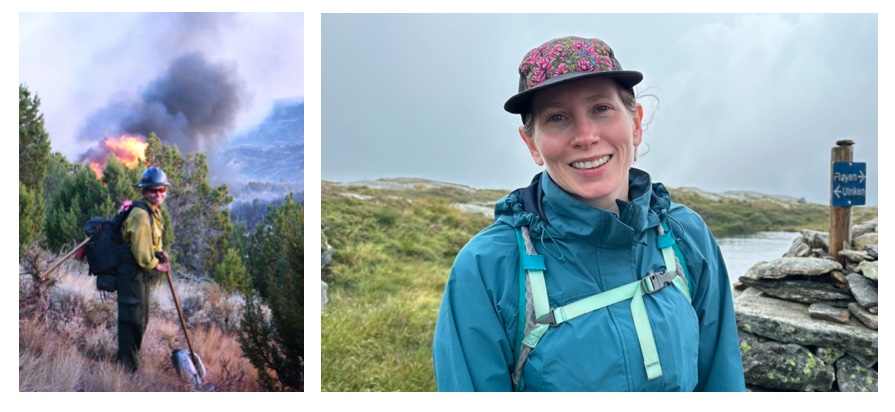
In January, I’m starting a new journey. After 7.5 years in Minneapolis, I’m moving to Missoula, Montana, to begin a graduate program in Forestry at the University of Montana. There, I’ll get to continue working on research projects that support the restoration of fire to public lands through prescribed burning. Fire has been an immense part of my life since 2012, the summer I drove across the country from Iowa to Utah to join a Forest Service crew of wildland firefighters.
As excited as I am for this next step, I’m going to miss the people and places that have filled this chapter of my life – and I want to take this moment to thank the Grace community for being such an important part of these last few years. I can’t claim to have found answers to any of the big, hard questions I came to Grace asking, but it has been deeply meaningful to me to have the support of this community while asking them.
In gratitude,
Clare
P.S. For those interested, I’ve written about my seasons as a firefighter in a memoir forthcoming from Beacon Press. My editor hasn’t set a publication date yet, but if you’re interested in hearing when that happens, you can sign up for updates here or look for them on my website at clareboerigter.com.
The Hope Within Us
 Friends,
 Last Sunday, Marion Larson preached a sermon that reminded us that "It's Friday — but Sunday's coming." You can listen here!
That theme of defiant hope was strong at last week's Annual Convention of the Episcopal Church in Minnesota—a gathering of clergy and lay leaders from the 100-ish congregations of the diocese for prayer and learning and worship and governance.
[ Read reflections from Linda, Tom, and Sarah, and see photos! ]
Here's a taste of what we heard from Bishop Loya:
These days, as we are “being a diocese in an exilic, remnant key,” the congregations of the Episcopal Church in Minnesota are going to need to:
1. Be weird. "Authentic Christianity will appear strange because Jesus invites us to live inside a very different story than the zero-sum battle of winners and losers that pervades our culture."
2. Keep digging the deep, interconnected roots that build resilience: apprenticing our lives to Jesus together.
3. Embrace our limits. "We often still try to sustain the local congregation as a full service program center for all types and peoples and interests – as if we could paddle the boat at the same speed that it used to be blown by strong cultural tailwinds. We are going to have to set down things that are not part of our core work of making disciples and practicing God’s way of love, and that will always disappoint someone."
4. Live with a bold and contagious hope that Love has already won. "As followers of Jesus, we face fear and hardship and death from the place of hope that is in us. God and the world don’t need us to be large, or wealthy, or influential. What God asks, and what the world needs, is for us to look like the cross of Jesus Christ, meeting the forces that assault God’s children with God’s fierce and gentle love, joining the Spirit, gathering all of it to God’s perfect embrace.”
You might hear more about some of that at our Annual Meeting on January 25!
With love,
Susan+
Pro-Democracy

[In a world that seems increasingly chaotic and broken, many of us feel helpless and afraid. We may question what we can do to make a difference. To build collective courage, in this space we will share examples of how individual members of GEC are practicing the way of Jesus, in private action or in the public arena. How might you find inspiration and hope in the small steps others are taking?]
"Over the last ten months I’ve worked to become more involved in actions to help promote democracy in our country. My reason for doing so is due to trying to counteract with action the anxiety I feel about our fragile democracy. This past election day, November 4, I had the opportunity to volunteer here at Grace Episcopal Church as a lobby host to help greet voters, help them find their way around the building, and help with security issues."
"During my shift I interacted with many voters including a woman and a man who walked in together. I greeted them and pointed them in the direction of the check in table. The man went in and the woman stepped aside and told me that she had already voted earlier in the day. She said she had helped her friend get registered to vote and was bringing him in to provide moral support. Judging by her expression she seemed quite happy to do so and help someone to engage with the process."
"Voting is one of the most basic ways we can put our faith into action. I found it impressive that she was putting her own values into action by encouraging someone to vote and help them get registered." -Submitted by Joe L.
Voices from Convention
 From Susan+:
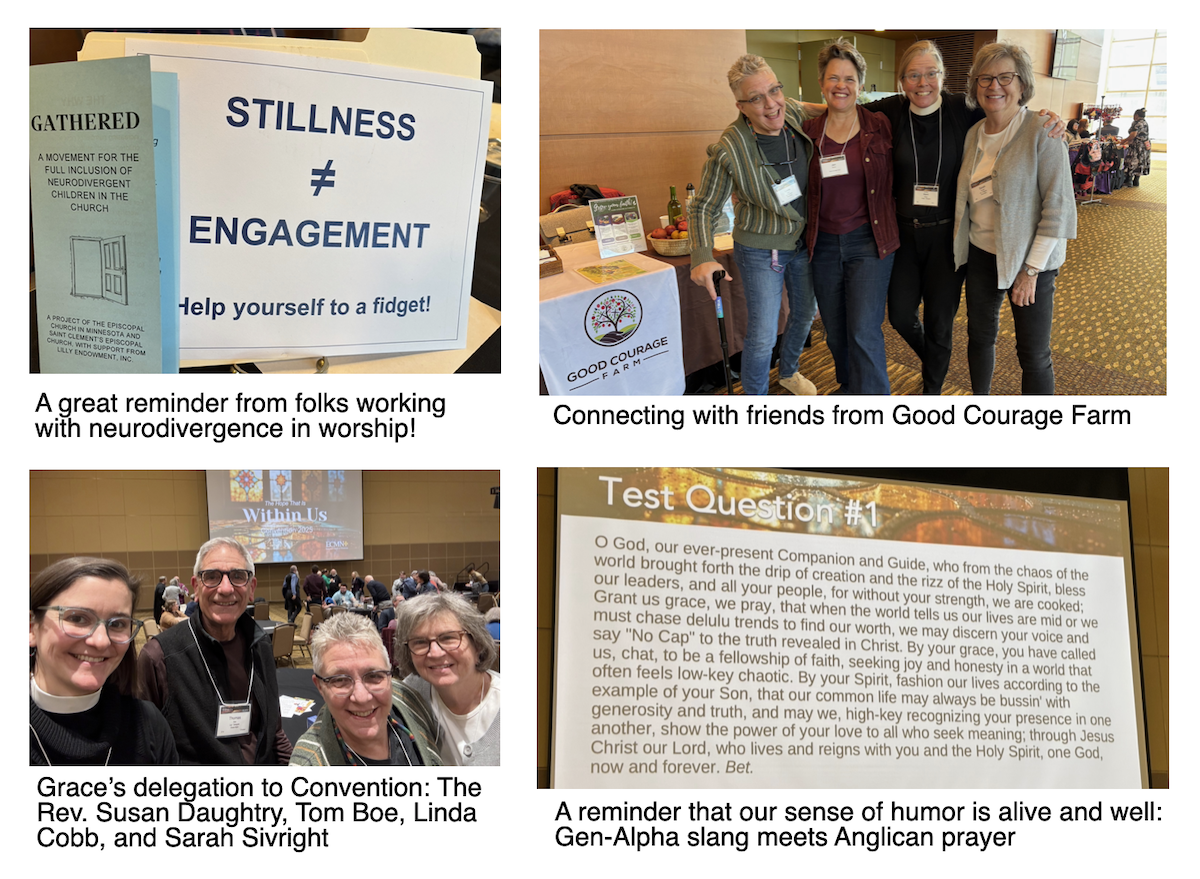
A family reunion. A resource fair. Worship. A chance to fill your spiritual tank. All these things (plus some governance work) are part of the Annual Convention of the Episcopal Church in Minnesota, the 100-ish faith communities and associated organizations that Grace Episcopal Church is part of. Our delegation (myself, Tom Boe, Linda Cobb, and Sarah Sivright) attended the event in Rochester last weekend and came home full of ideas, encouragement, connections, and energy. Also attending: Chris Opsal was there repping EfM (Education for Ministry, a scripture-and-theology-and-faith-reflection program), along with many clergy who attend or are friends with our congregation!
From Linda Cobb:
It was a gift to attend the ECMN Convention for 2025. I am always amazed, and delighted how inspired and uplifted I feel during, and after the convention. There were so many moments I could share about that experience, but I will have to keep it simple-such as: Bishop Loya's address to the convention-if you have access to that, I highly recommend it. He leads us towards the focus of convention, but also looking forward to our work ahead as a Diocese. There was a speech from Cyara who leads the Food Ministries at Casa Maria, deeply moving. Her message to us is: " remember to love and support people no matter who they are" and the collaboration the Bishop shares with Bishop Betsey from Iowa who led us in group work on Saturday. And so much more....what I will leave you with are a few of the moments that really touched me. Bishop Loya reminded us that what we are experiencing in our country right now-political and religious division is not novel. We have seen this happen throughout history. What he reminded us so deeply is this: "we may feel we are in a Babylonian type exile, rather than rage against it, let's get comfortable with discomfort, settle in, plant gardens, start a family, and seek the welfare of those around you" that this is a "gift to be embraced, tend to small communities of practice, witness and resistance!" Finally, "don't you forget the outrageous promise of God that will sustain you!"
From Tom Boe:
I heard one theme over and over in different ways at our ECMN Convention 2025: Our congregations seem focused mostly on money and building questions vs. God and community questions.
The story of St. James & St. Luke's was held up at Convention as a positive example of a community giving up their treasured place of worship and joyfully joining another in one place. In our world with fewer believers, though, many of our congregations have not done as well in focusing beyond their beloved building. They struggle for years to simply survive in place. Some have broken up and have faded away.
On the day after Convention the first verses of our Sunday Gospel (11/16/2025) hit me in a new way:
Luke 21: 5-6
When some were speaking about the temple, how it was adorned with beautiful stones and gifts dedicated to God, he said, “As for these things that you see, the days will come when not one stone will be left upon another; all will be thrown down.”
God never asked for a temple anywhere. Instead, God provided detailed instructions for the portable tabernacle (tent) that was to be set up to shelter the Ark of the Covenant wherever the Hebrews happened to be. It was David who decided on a temple, embarrassed that he’d built an elaborate palace for himself when God’s place was this old tent.
With God’s assent (if not encouragement), David carefully designed an elaborate temple, which his son Solomon built. Hundreds of years later, the Babylonians destroyed that "first temple" and carried the Hebrews off to exile in Babylon. Eventually Cyrus the Great of Persia conquered Babylon, released the Hebrews, and helped them rebuild their “second temple” on the same spot as the old one. Less than 50 years after Jesus's prediction, that second temple was again destroyed by the Romans and the Hebrew people were mostly scattered elsewhere.
For hundreds of years thereafter, the People of the Book—Jews, Muslims, and Christians—have killed thousands fighting over the hill and the surrounding land where that temple once stood. They continue to do so.
Now in our time, our congregation joined together, standing for God’s mission and for faithful community over devotion to a beloved place of worship. I fervently pray that we—and our Christian brothers and sisters—don’t forget what we learned during that time of testing, faithful discernment, and holy choice.
From Sara Sivright:
This being my third convention, I saw many familiar faces--some friends, some people I admired as our leaders, convention planners, key figures in the diocese. What immediately struck me was a sense of comfort and energy—two odd things to partner. I was taken back to the consolidation process that created Grace Church and gave us our name. Along the way, we were led by several groups of thoughtful, sensitive, smart and collaborative people, who helped us experience a miracle of sorts in a time of anxiety and pain. Now I was feeling the same comfort and energy in a different context. The amazing people of ECMN are leading us in a time of global anxiety and pain with spiritual reassurance and direction. As Bishop Loya said in his opening address, “The present story is not new—not novel but true.” He reminded us of our history as children of God and urged us to plant gardens even in places of exile, grow deep roots, accept our limits, focus on what’s most important, and have hope. Sounds to me like our Grace story and the message for what lies beyond our doors.
In My End is My Beginning
 Friends,
 Last Sunday, I preached about grief, loss, and resurrection. You can listen to the sermon here.
In his poem Four Quartets, T. S. Eliot wrote, "In my end is my beginning." His poem was about the spiritual journey, but it applies too to the work of grief. In all the ways we find ourselves lost after the death of a loved one, God holds out a promise of resurrection that offers new life. I believe that new life does not erase the pain and wounds we carry, but lets us move forward, healed, forgiving and forgiven, with the hard-won wisdom of all those chapters of our lives. Whole and free, with our wounds and our scars.
Eliot's words point us, too, to the cyclical nature of the church year. In just a few weeks we'll celebrate Christ the King Sunday -- the 'end' of the liturgical calendar, when we proclaim Jesus as God's final word of restoration and hope. And then, the following Sunday, we begin again with Advent, the yearning for salvation. Our lives echo this movement, from end to beginning, in ways that are practical and mystical, too.
As we approach the end of the liturgical year, I wonder what vision keeps you going? What is the 'end' of the journey you hope to reach, with God's help?
With love,
Susan+
Liberated Life
 [In a world that seems increasingly chaotic and broken, many of us feel helpless and afraid. We may question what we can do to make a difference. To build collective courage, in this space we will share examples of how individual members of GEC are practicing the way of Jesus, in private action or in the public arena. How might you find inspiration and hope in the small steps others are taking?]
"Between December 2024 and November 2025, I felt called by God to write seven Bible commentaries (Genesis, Luke (x3), Acts, Romans, and Revelation) to explore what a Liberated Life looks like. This is grounded in an open and inclusive reading of God's Word. I know, from personal experience, that the Bible can be misused to judge and shame others, weaponizing texts into what are known as 'clobber passages'. I wanted to challenge people to read the Bible lovingly, counter divisive interpretations, and support those struggling with their faith."
"When people declare, 'The Bible says,' it is often not to use it with grace, but to shame people into changing their ways. My journey in writing these commentaries has shown me that Christians are called to a higher standard of grace and mercy, exemplified by loving God and loving your neighbor. I have also learned that the Bible speaks directly into the story of our lives, transforming us by connecting our experiences to those within its pages. Messages become distorted when we allow guilt, shame, and judgement to dictate our reading of God's Word, which is intended to unite us, not divide us. Its transformative power comes as we let the Holy Spirit heal our relationships and follow Jesus in discovering the way to the truth about life. This is lived unapologetically in the Unconditionally Loving presence of God."
You can find out more and buy Liberated Life Bible Commentaries here:
https://www.amazon.com/dp/B0DWT9GLQJ?binding=paperback&ref=dbs_dp_sirpi
This is my website: www.divineinfinity.org
Submitted by Steve R
All Saints & All Souls
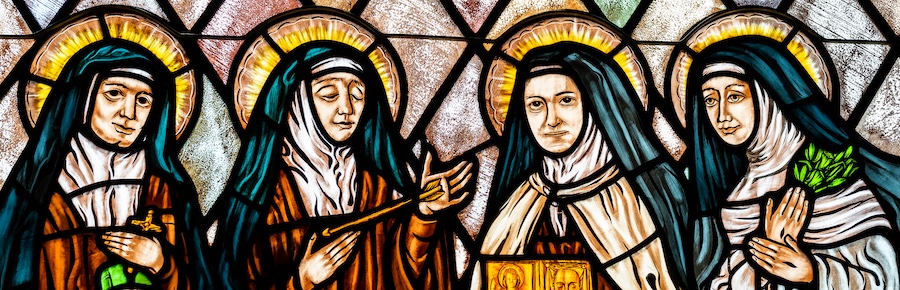
Friends,
What a fabulous celebration of the feast of All Saints on Sunday! All Saints celebrates the Saints who have gone before us -- those whose lives show us what it looks like to practice the way of Jesus in their time, so that we can creative and courageous in ours. From a fabulous litany and procession representing many saints, to music by our Parish and Youth choirs, to a celebration of our Pledge Campaign for 2026, the day was full of defiant joy. If you missed it, catch the video here.
My sermon shared about the Rev. Pauli Murray, an American icon and one of the saints we look to on the Episcopal calendar of saints. The way of Jesus that we see in Pauli Murray’s life is a way of creative, resilient, nonviolent work for justice. I hope you'll take a moment to learn more about Murray's life!
As you exercise the right to vote today, I encourage you also to bring non-perishable food to Grace for us to share. You can find more information about that below.
With love,
Susan+
Food Box Update
With SNAP benefits ending in November, now is a wonderful time to keep our Food Box full! We’re inviting everyone to take part in a November Food Box Drive to help stock our outdoor pantry. Throughout the month, we’ll collect non-perishable, winter-safe food items to create a reserve for the colder months ahead.
We’re mindful and grateful that Grace is already deeply engaged in feeding ministries with the Minnehaha Food Shelf, First Nations Kitchen, and Casa Maria. Making sure our Food Box is fully stocked is another great way to show our support for the neighborhood and our ability to lead with compassion in the face of this new crisis.
Suggested items include:
Boxed meals (mac and cheese, pasta, rice packets)
Granola bars and snack packs
Peanut butter and jelly (in plastic jars)
Cereal, oatmeal, or instant soup packets
Dried fruit and nuts
**Please note that canned goods are not winter safe as they can crack when frozen.
Even a few extra items each week can make a meaningful difference for neighbors facing food insecurity this winter. Let’s come together to keep our Food Box full and our hearts open.
Donations can be dropped off in the hallway by the Commons during the month of November.
Voting for the Common Good
 [In a world that seems increasingly chaotic and broken, many of us feel helpless and afraid. We may question what we can do to make a difference. To build collective courage, in this space we will share examples of how individual members of GEC are practicing the way of Jesus, in private action or in the public arena. How might you find inspiration and hope in the small steps others are taking?]
"As I write this on the morning of Tuesday, November 4th, I'm looking forward to exercising my right to vote for elected officials in the city of Minneapolis. Why do I consider voting an essential way of putting my faith in action? The National Council of Churches offers an answer which resonates with me strongly. It is found on their webpage: 'As a part of our stewardship in a democracy, Christians have an obligation to make the most educated decision possible about who will represent our concerns on the local, state, and national levels. The voting booth is how we can participate in making sure there are leaders who will enact laws for the common good that do justice and love mercy; care for the most vulnerable in our society; ensure, to the extent possible, that our government lives up to this nation’s ideals by the people and for all the people; and, perhaps most significantly, hold leaders accountable.'" Submitted by Joe L.
Praying with My Feet
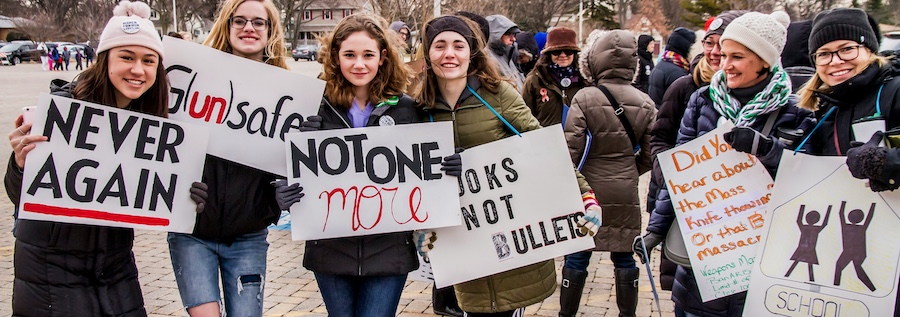
[In a world that seems increasingly chaotic and broken, many of us feel helpless and afraid. We may question what we can do to make a difference. To build collective courage, in this space we will share examples of how individual members of GEC are practicing the way of Jesus, in private action or in the public arena. How might you find inspiration and hope in the small steps others are taking?]
"I attended the Seven Day gatherings beginning on October Eighth on the steps of the State Capitol building. Five hundred clergy had signed a letter asking that Minnesota pass a ban on Assault Weapons and High Capacity Magazines. Before the prayers, seventy of us proceeded into the building to present this letter to Governor Waltz’s representative. The letter was read and handed over. Then a statement from our own Bishop Craig Loya was read, which said in part 'Any refusal to enact simple and sensible gun control now is accepting the murder of innocent children as a normal part of our society. Such an acceptance would be a moral failure of the greatest magnitude.' By this morning our 500 signatures on this letter had increased to 935 clergy from 70 counties across the State.
Most of the gatherings included a period of silent prayer for 120 seconds, the amount of time the shooting at Annunciation School lasted. As I prayed the Silence I tried to imagine how long it must have felt for those inside the worship who were sheltering and terrified, hoping it would stop.
We realize that many other things must happen in terms of equity and inclusion and care for the least able to care for themselves before we find a solution. And isn’t that what the Way of Jesus asks of us. To care, and care, and care with prayer and with action that joins God in the project of healing the world with resilient, embodied, and joyful love!"
—Gretchen P
Using Money to Heal and Restore

Friends,
A mental game I like to play sometimes goes like this: If someone gave you $15,000, no strings attached, what would you do with it?
$15k isn't enough to buy a brand new car or finish your basement. But it's more than enough to take a fabulous vacation. For many of us, $15,000 would make a huge dent in our credit card debt, or refill an emergency fund. If you're on a limited income or looking for work, if you aren't being paid during the shutdown, that amount of money would make a massive impact in your ability to sleep at night. Many in our community would be better able to meet basic needs—to eat and pay for childcare and medication and rent—with that amount of money.
So, if the wealth fairy visited you with a stack of cash: What would you do with it? This hypothetical gift game challenges my values about how I tend to my family's needs and long-term interests, as I become more aware of the needs of my neighbors and community.
Last Sunday, the Rev. Larry Bussey preached, sharing a story of his own work to use his money as a sacramental tool to help heal and restore issues he cares about. He wrestled with the texts from Jeremiah and from Luke, and wove in his experience at the No Kings rally last Saturday. You can listen to the sermon here.
All of us have financial stresses and obligations, and some of them are very different from others. That's why you'll see on our pledge card this year a box to acknowledge "I'm giving more this year knowing there are many in our faith community that have fewer financial resources at this time." If you're struggling this year, we want you to know that this community has your back. And if you aren't struggling, perhaps your gift can help bridge the gap for someone else.
With love,
Susan+
Persistent Gentle Kindness

Beloved in Christ,
When I was seven, I was hospitalized several times in a short period for a respiratory illness that was much more serious than I had any ability to appreciate at the time. I remember very little from those days in the hospital. I remember the image of my grandmother sitting in a chair next to my bed, and I remember when Pastor Van from First Lutheran Church came to visit. I found it supremely odd that the church pastor would stop by the hospital to see me. I don’t remember a single word he said. I don’t even remember what he looked like. But I remember him being there. His presence, and my grandmother’s steady kindness, have left large and lasting imprints on the shape of my whole life. Two ordinary moments, with ordinary people, exercising ordinary kindness, are among the most durable memories I carry with me.
In these present days, when there is so much pain, and fear, and anger swirling in all directions and from all sides, it is so easy to get hooked into thinking that being a force for good and hope must involve big actions fueled by righteous anger. When I find myself going to that place, as I often do, when I get tricked into thinking following Jesus is about trying to win a battle rather than participate in God’s project to heal the world with love, it’s helpful to remember that my grandmother and Pastor Van helped shape my whole life by small, almost forgettable acts of gentle kindness.
In our reading from 2 Timothy this week, the writer urges us to “be persistent whether the time is favorable or unfavorable.” If it feels like the world is falling apart, it’s because it is, and it nearly ever has been. Our work is not to stop it from falling apart. Our work is not to be the most right and impose a new order on the falling apart world. Our job, when the weather is good and when it is very bad, is to be persistent in gentle kindness. Our job is to keep showing up in our very small communities that are dedicated to showing up as God’s gentle kindness in the world. Jesus did not take the falling apart world by angry force. He met it, as he meets it still, with persistent gentle kindness. And the resurrection we affirm as real each and every Sunday settles forever that God’s persistent gentle kindness is the most powerful force in the universe.
The kingdom of God is not ours to engineer or to impose. Rather, just as the Lake Superior tributaries have carved out the canyons that hallow and transform yet another part of our beautiful Minnesota, so our persistent gentle kindness, through small communities over a long arc, when caught up in the resurrection’s power, will flood the whole earth, and make all things new through the glorious power of love.
Grace and Peace,
The Right Reverend Craig Loya
Bishop X
Episcopal Church in Minnesota
Reimagine a Hopeful Future

Friends,
Last week, I preached about the practice of 'Reimagine.' We dug into the hard good news the prophet Jeremiah offered to his country-people in exile, and the hard good news Jesus offers in seeing the faithfulness of the Samaritan healed of leprosy. In both those stories, God is in the business of helping us reimagine things for a hopeful future. God asks that we do the long, practical, one day at a time work of trusting that God’s triumph over death is more real than the hardships we face. You can listen to the sermon here.
Last week, we did more of that reimagining at our Wednesday evening session. We talked about the story in which Jesus notices the faithfulness of the woman at the Temple who gives her last two copper coins, "all she had to live on." Many of us have been taught that Jesus held her up as a model to emulate. Put on your 'reimagining' hat here with me for a moment: What if Jesus was lamenting her gift? What if Jesus was pointing out the hypocrisy of a system in which the wealthy could easily give large sums out of their abundance, while expecting sacrificial gifts from those most in need? Read that story -- Mark 12:38-44 -- and then read the prayer below if you want to go deeper, and listen in to our conversation here.
With love,
Susan+
A Prayer to Help us Reimagine
Jesus of Nazareth,
In scripture we hear of a woman who gave her last coin away.
You pointed her out, but you did not say, “Go and do likewise.”
So we cannot help but wonder—did you point her out to ask,
“Why does this one have so little when others have so much?”
Did you point her out to help us see the injustice that led to her suffering?
Maybe.
So today, for her, and for you, and for every person who cannot afford to give to God
And put food on the table, we offer our gifts.
We pray that you would use them for your good.
Right what is wrong.
Balance the systems of injustice.
Use these gifts to build the world that we can only imagine
But you can bring forth.
In hope we pray,
Amen.
Civic Discourse

[In a world that seems increasingly chaotic and broken, many of us feel helpless and afraid. We may question what we can do to make a difference. To build collective courage, in this space we will share examples of how individual members of GEC are practicing the way of Jesus, in private action or in the public arena. How might you find inspiration and hope in the small steps others are taking?]
"My wife Betsy S and I recently decided to host a meet and greet at our home for Mayor Jacob Frey. I saw that Kathy M L is hosting a meet and greet for mayoral candidate Dwayne Davis. I’m sure that regardless of who we support, we all believe practicing Jesus' way of defiant, embodied, joyful love in our city means we try to create spaces for respectful civic discourse and engagement. Defiant and perfect love casts out all fear and rebukes resignation and defeatism."—submitted by Mark F
We Have Been Set Free

Beloved in Christ,
Like most people, I am at my worst when I believe I have something to prove. When I think I need to prove to others that I am smart enough, or good enough, or right enough, or likeable enough, or worthy of love, or whatever, then everyone who is different than me is a threat, every criticism is an attack, every disagreement is a battle I have to win. That gnawing feeling we all carry somewhere inside that we are deficient in some way is called shame, and when we live from this place, our whole life feels like a fight.
Our reading from 2 Timothy this week urges us to stand before God as “a worker who has no need to be ashamed.” The heart of the gospel of Jesus Christ is that we are loved, immeasurably and unimaginably, not because we have proven ourselves worthy, but simply because we have been created by the God who is infinite love.
To be sure, we are called to act morally, to live righteously, and to reflect holiness. But not in order to convince God and others that we are good enough. Our actions, like the Samaritan leper’s gratitude in this week’s gospel, are a response to what God has already done for us. We don’t act in order to win our freedom, we act because we have already been set free.
Our current culture and politics frames life as a binary battlefield with only winners and losers. It secures that field by constantly poking at the shame inside us. You don’t have enough. You haven’t done enough. The world, or the nation, or the church, or your family, would be fine if you just tried harder and did more. It’s all a lie. Following Jesus is about subverting that lie with the gospel of God’s limitless love.
If you are discouraged by the state of our nation, if you want to be a force for healing and good, then instead of just fighting harder in a world designed to lock us in perpetual warfare, try standing “before God as one approved by him. A worker who has no need to be ashamed.” Try starting each day, each conversation, each encounter in that place.
When we set down the struggle to secure some imagined freedom, and accept that we have already been set free, we find, finally, the power to join God in setting the whole word free with irresistible joy, with unshakable hope, and with revolutionary love.
Grace and Peace,
The Right Reverend Craig Loya
Bishop X
Episcopal Church in Minnesota
Faith Grows Like a Mustard Seed

Friends,
I hope you'll join us to reflect on the practice 'REIMAGINE' as part of Our Money Story. Scroll down for a brief prayer to start you thinking.
On Sunday, our deacon postulant / intern Huldah Niles preached on Jesus' words about faith being like a mustard seed. She talked about what a process of growing in faith might look like. You can listen to the sermon here.
In Love,
Susan+
A Prayer to Help us Reimagine
Jesus of Nazareth,
In scripture we hear of a woman who gave her last coin away.
You pointed her out, but you did not say, “Go and do likewise.”
So we cannot help but wonder—did you point her out to ask,
“Why does this one have so little when others have so much?”
Did you point her out to help us see the injustice that led to her suffering?
Maybe.
So today, for her, and for you, and for every person who cannot afford to give to God
And put food on the table, we offer our gifts.
We pray that you would use them for your good.
Right what is wrong.
Balance the systems of injustice.
Use these gifts to build the world that we can only imagine
But you can bring forth.
In hope we pray,
Amen.
The Way of Jesus Amid Authoritarianism

Friends,
Yesterday, my sermon focused on the surprising meaning of a 6th-Century BCE scrap of real estate history -- the prophet Jeremiah, after decades of prophesying doom, releases his hold on that story just as the doom is about to come to pass. He lets go of that story and claims hope for the future, with prophetic performance art: the practical action of buying a field. You can listen to the sermon here.
This story has direct relevance to what I hear from so many of you and feel deeply myself -- a sense of despair that we are powerless to stop the authoritarian government we see now in the United States. I shared research from Erica Chenoweth, linked below, to offer hope: it takes fewer people than you might think, acting together, to help the silent majority withdraw its cooperation from an authoritarian regime.
Jeremiah's claim to the deeper story -- that God's dream of shalom is greater than all empires and authoritarians -- is what we stand on today, too. And because we trust that God's love prevails, we can offer our own performance art for God's kingdom, where we are, with what we have.
So: what story do you need to release in order to trust that God's vision of shalom will prevail? How could you practice the way of Jesus in this historic moment? What's the (metaphorical) field you can buy, where you are, with what you have?
With love,
Susan+
Dig into Erica Chenoweth's Research
Here are a few links to get you started:
Video: The Science of Protest, on the Civic Forum
Podcast: Why Protest Works, on We Can Do Hard Things
Website: ericachenoweth.com/research
Canvassing as Spiritual Practice?
[In a world that seems increasingly chaotic and broken, many of us feel helpless and afraid. We may question what we can do to make a difference. To build collective courage, in this space we will share examples of how individual members of GEC are practicing the way of Jesus, in private action or in the public arena. How might you find inspiration and hope in the small steps others are taking?]
After hearing Susan’s moving sermon last Sunday, I went to prepare a train-the-trainer for canvass leaders. One of the most visible ways I put my faith into action is through my involvement in local politics, this year focused on the mayoral race in Minneapolis. I am co-organizing a group of everyday workers, parents, musicians, and more who are committed to knocking 10,000 doors for Omar Fateh because we share a vision for a city leader who walks the talk when it comes to advocating for affordable and quality education, creating lasting support systems for our unhoused neighbors, refusing to cooperate with the detainment of our immigrant community members, collaborating with colleagues including fellow candidates DeWayne Davis and Jazz Hampton, and so much more.
I wasn’t always interested in canvassing. Knocking on people’s doors to talk to strangers requires the same kind of oomph that performance art does! And I had a whole list of things I could use to excuse myself from participating. But then a friend invited me to door knock as a spiritual practice. It turns out that to leave the house, dressed in a campaign t-shirt with multiple buttons and holding more flyers than fit comfortably in my hand, to knock on someone’s door whom I don't know and ask them what they really care about is one of the most faithful things I have done. I perform my concerned neighbor part, I humble myself as a stranger, and I risk rejection and annoyance and bigotry in order to actually practice being a neighbor who listens to and connects with other neighbors–you and I both live here, how are we going to live here together?
God Wants to Help Reshape our Stories
 Friends,
 Last Sunday, I preached about pottery, about the fact that, until it's fired, the clay is infinitely re-shapeable. Our Scripture texts spoke of God as the potter, as Jesus invited people to reshape their stories, to rewrite who they could become. These earliest Christians had to overcome broken stories defined by enslaver/enslaved relationships, as they moved toward healthy stories of respectful friendships. God can do that reshaping work with us and with our stories, if we pause to remember what stories we've been telling ourselves. You can listen to the sermon here.
Money is one thing about which we tell ourselves a lot of—mostly unconscious—stories. And as Grace Episcopal Church looks to discern who God is calling us to be in the coming years, we are going to need to be able to remember and perhaps release some of our stories about money. Read on below to connect with reflections we're inviting everyone to engage this week and next, unearthing the story of your relationship with money.
We will spend the coming weeks engaging in four practices: Remember, Release, Reimagine, and Restore.
This season will be about asking: What stories about money have we learned and told, as individuals and as a congregation? Stories of scarcity, abundance, fear, joy, misuse, regret, shame, anxiety, deserving, grace, service, generosity, freedom? What parts of those stories are we still telling ourselves? If we’re willing to unearth these stories, we could let God heal them.
This is not about telling each other how much more you should be giving or what your money story should be. We hope it will be a season of openness, curiosity and healing, remembering the best of who we are and asking God to restore us into who we are called to be.
As you work through these spiritual practices, there will be opportunities to gather and talk with others. All the details are at the link below, and I hope you’ll join us for some or all of those gatherings.
With love,
Susan+
What is Helping You Act Like Jesus?
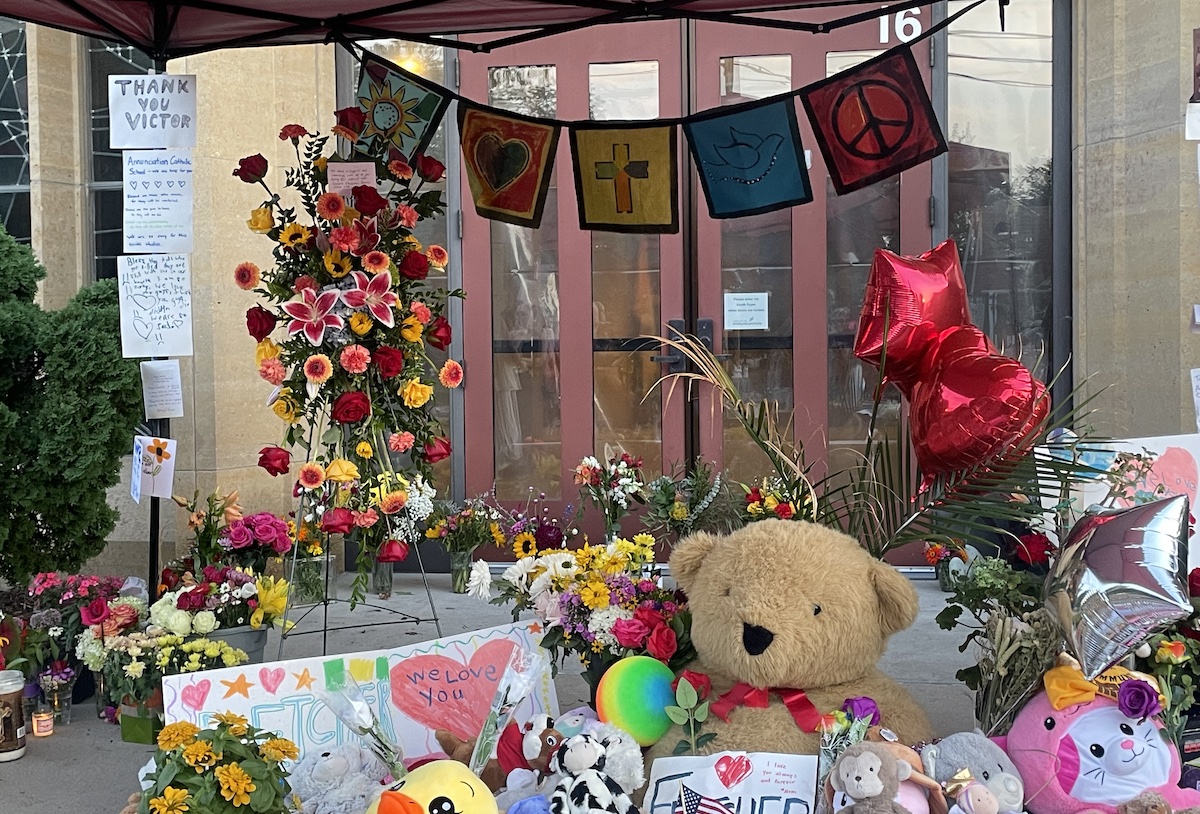
Friends,
On Sunday morning, some of you heard an NPR Weekend Edition piece that included interviews with clergy serving near Annunciation. I was honored to be interviewed. You can listen to it here.
Last Sunday's sermon focused on the text from the prophet Isaiah -- and on God's bewilderment, in Isaiah's words: “My people have committed two evils – they have forsaken me, the fountain of living water, and dug out cisterns for themselves, cracked cisterns that can hold no water.” I spoke about the ways our culture, like Isaiah's society, has traded in the wild, living God for the small, broken gods. The idol of personal safety and personal wealth instead of God's dream of a society based in equity and care. You can watch the sermon here.
After twenty-five years of school shootings, our country's inability to make progress in mental health care, common-sense gun policy feels not just tragic nor like a mere failure of will. It feels insane. Like a collective choice not to make progress on mass shootings. How long, O Lord?
I feel bewildered. I know so many of you do too. Why have we traded in our sacred spaces - schools and churches and neighborhood streets - for pop-up war zones?
As we send our kids back to schools that regularly have to do lockdown drills, as we metabolize this latest violation, as we try to care for our neighbors, I hope you will be exquisitely gentle with yourselves and each other.
And I hope you will take to heart the words I shared from Bishop Loya on Sunday:
"Now is the time for us to show up looking, sounding, and acting like the real Jesus in the world. Now is the time for us to remember that the stakes of the gospel are high, and that following Jesus asks something big of each of us. Now is the time to remember that the Eucharistic communities we serve are not nice gatherings offering maudlin spiritual comfort, but are in the business of subverting the world’s violence with God’s irresistible love."
Some of you have already shared ways you're showing up for healing and peace. (Members of Grace have gone to the memorial site at Annunciation with peace flags—in the photo at the top of this article—and offered bagpipe music there!)
How are you taking action to show up looking, sounding, and acting like the real Jesus in the world? I'd love to share your responses in my email next week. Your small steps will be courage for someone else to take their own.
With love and bewilderment,
Susan+
Prayers in the Wake of Violence

Friends:
Last night, we opened our doors for a vigil. Members, neighbors, and friends came and sat together in candlelight and silence.
The violence in our city in the past few days—gun violence incidents in South Minneapolis and at Annunciation Church and School in particular—hit close to many of us. I offer these prayers below, as you navigate exhaustion and fear and numbness and rage and grief, holding tight to a defiant hope in God's dream for the world: a life of safety and abundance, in right relationship with all our neighbors and the earth. We practice Jesus' way of defiant, embodied, joyful love, even and especially in the wake of profound violence.
Susan+
________________________________________________
Prayers in the Wake of Violence
Adapted from prayers by Bishop Deon Johnson of Missouri
bishopsagainstgunviolence.org
For Victims of Gun Violence
We pray as we as we call to mind the many victims of gun violence, those who have lost their lives, those who have lost their livelihood, and those who have lost life’s passion. We pray for those who have been killed here in Minneapolis, especially at Annunciation Church and School, and we hold their stories and their memories dear. May their loss not be in vain, and may we shape a new story of hope from the broken pieces of grief. Amen.
For Friends & Family of Gun Violence Victims
We pray with those who have been left behind, the families, friends, and loves ones of those taken by gun violence. We pray that in this time of heartbreak, grief, and loss that they might find comfort and hope to face the days ahead, and that their tears may be turned into songs of joy. Amen.
For Communities Torn by Gun Violence
We pray in hope as we tell the story of homes, communities, neighborhoods, cities and town shattered by gun violence. We call to mind the sacred ground around our nation that has been watered with the blood of loss and the tears of grief. Grant that we may work tirelessly towards a vision where all may sit under their own vine and fig tree in safety and security. Amen.
For First Responders
We pray for first responders, those who live with the horror of gun violence in service to the common good. We stand with them and their families as they heal from bearing witness to the aftermath of lives ended in violence. Grant that we, with them, may create a world where all are protected, all are honored and all are seen, valued and beloved. Amen.
For Schools
We pray for our school communities, for teachers and administrators who offer their energy and love for teaching the next generation, and who now also must safeguard the lives of young people with emergency protocols. We pray with them that our young people, growing up in an unpredictable and fearful world, will meet the challenges of violence with the courage to practice peace and reconciliation. Amen.
For Those Demonized in the Wake of Violence
We pray for our queer and trans friends and neighbors, for immigrants, and for all whose identities are weaponized as scapegoats in the wake of violence. Move our society to see the ways division and fear are leveraged for profit, and help us to reject the politics of hatred and fear, so that all can live with dignity and peace. Amen.
For The Perpetrators of Gun Violence
We pray for perpetrators of violence. We pray for their families, their friends, and those who love them. We pray for those who see no other way than violence. We pray for those who suffer from mental illness, social isolation, loneliness, and debilitating fear. Grant that we may reach out in love and transform anger into friendship and fear into hope. Amen.
For those who feel helpless in the face of Gun Violence
We pray in solidarity with those who feel helpless, dejected, or powerless in the face of the gun violence epidemic. We know that gun violence touches all cultures, classes, genders, races, tribes, and nations. We pray that we may not be overwhelmed by gun violence but that we may overwhelm the world with the strength of love. Amen.
____________________________________
Spiritual Practice
Honoring the Ache | from The Rev. Cameron Trimble at Piloting Faith
This week, choose one grief you’re carrying for the world. Name it clearly. Then, without trying to solve it or suppress it, spend 5–10 minutes each day simply sitting with it.
Place your hand on your heart. Breathe into the ache. Ask: What does this pain teach me about what I love?
Then, write one sentence each day that affirms that love—something you want to protect, preserve, or praise in this world.
Let your heartbreak become a compass.
A Spiritual Practice for Anger

Friends,
Yesterday, I preached on a difficult text in the Gospel of Luke, in which Jesus says, "I came not to bring peace, but division." His exasperation, anger, and impatience are on display. We often have strong reactions to texts in which God/Jesus seem angry or judgmental -- many of us have been taught to internalize those words as shame. Many of us have been taught that those words are precisely why you shouldn't bother with Christianity anyway. In the sermon, I asked listeners to consider why Jesus was so frustrated, why people seemed to react with division to his message of peace, and how we let our own frustration and anger be a guide for our participation in the way of love. I shared a spiritual practice (hat tip to David O'Fallon, who shared it with me a few weeks ago) that can help us connect with those feelings and perhaps use them as a compass. You can find it below.
To catch up on that and other recent sermons, click here.
Along with that practice of entering our impatience and anger, people of the way of Jesus get to claim a radical hope. As our bishop put it recently:
"As followers of Jesus and heirs of God’s promise to Abraham, our call in this moment is to stand in the face of that cynicism as people of outrageous, even laughable, hope. Our call is to help lift heads hung heavy by the weight of death, injustice, and suffering, that we might all consider the stars, and make a choice to cling to nothing more, and nothing less, than the promise, most fully revealed in the resurrection of Jesus from the dead, that love’s power to bring in God’s perfect reign exceeds even their seemingly endless number. Can we live in this moment with Sarah’s defiant joy, Abraham’s absurd hope, and a fierce commitment to God’s better way, anchored in an unimaginably vast horizon of hope?"
You can read the rest of his message here.
Susan+
—Spiritual Practice
Honoring the Ache | from The Rev. Cameron Trimble at Piloting Faith
This week, choose one grief you’re carrying for the world. Name it clearly. Then, without trying to solve it or suppress it, spend 5–10 minutes each day simply sitting with it.
Place your hand on your heart. Breathe into the ache. Ask: What does this pain teach me about what I love?
Then, write one sentence each day that affirms that love—something you want to protect, preserve, or praise in this world.
Let your heartbreak become a compass.
What We Long for, but Cannot Purchase

Friends,
Last Sunday, I preached on Jesus' story of the lucky farmer whose grain harvest exceeds his ability to store it. He decides to build bigger barns, store his harvest, and then kick back, relax, and enjoy life. "You fool!" God says to him, in Jesus' parable. Real security is not about our wealth or our possessions. Real security is to be found in God and in the webs of interdependence, of trust and reciprocal giving, that we find in generous community. Real security is “what we long for but cannot ever purchase – being valued for your own unique gifts, earning the regard of your neighbors for the quality of your character not the quantity of your possessions, what you give, not what you have." (Robin Wall Kimmerer, in The Serviceberry) You can read more about this book in a MPR interview with the author.
Jesus invites us out of the economy of scarcity and competition and into an economy of gift and celebration (check out the parables about the lost coin, the dinner party with guests from the highways and hedges...). We told a story from Robin Wall Kimmerer's latest book, The Serviceberry, to illustrate the different mindset that gift economy offers.
To catch up on that and other recent sermons, click here.
Susan+
Joyfully Rigorous
 This week's lede is written by Kelsey Schuster, Canon for Operations and Chief of Staff for The Episcopal Church in Minnesota (ECMN).
My 9 year old daughter signed up for baseball this year with her best friend. She’s never played before. She wasn’t quite sure how to put the glove on, much less how to hold the bat and where to run after a hit. The learning curve was going to be steep, but she seemed excited about it.
After the first practice, where we learned that Joss wasn’t the only one on the team that wasn’t quite sure how many bases there were and what outfield was, her coach instituted practice three times a week.
Ugh, in the middle of the summer, practice three times a week and games two other days of the week? It’s too much, we’re too busy, that’s never going to work, it’s SUMMER!
Sorry, that was me, not my kid. She, in fact, was excited. ‘Do we have baseball tonight?’ Almost every day, the answer to that question was ‘yep’.
We were lucky enough to be paired with quite possibly the best coach I’ve ever been around. Coach Buck is exactly the type of person you want in your kids’ life. When I say he has a love for the game, I mean, he probably spends most of his spare mental space thinking of plays to run with the kids, which kid needs extra practice on what type of skill, and what he’s going to do about the kid who’s getting down on himself.
Coach has this magical blend of joy and love for the game and a fundamental expectation that each kid can be better, can do better. And he doesn’t expect excellence just in throwing and hitting and catching - he expects excellence in how you run onto the field when you’re playing defense, how you cheer your team on and show sportsmanship, how you treat the equipment and how you act in the dugout. It all matters, the game includes every little bit of it, and just being able to play well doesn’t make you a good player, doesn’t make you a team that can win.
Watching coach get frustrated with them when they didn’t meet that standard, I thought, gosh, those kids are just going to check out. But actually, the exact opposite happened. Somehow they knew he wasn’t frustrated with them because they were bad, he was frustrated with them because they could be better. They knew he didn’t want them to be better for his ego or just because he wanted to win (though to be clear, he really wanted to win), he wanted them to be better because he loved the game, and he wanted them to love the game too. He wanted them to be better because he knew there’s nothing better than playing a game really well. Whether you win or lose, knowing what to do and doing it well, making the big play, working together as a team, there’s just nothing better.
This is the point in my reflection where you should be saying ‘this is great, but what do you want me to do, turn 9 years old and play with the North Commons Bulldogs next summer?’ I mean, you should be so lucky, but, our experience with coach’s joyful rigor on the field has felt like a metaphor for me that relates to our call as followers of Jesus in this time.
What if there was a way to be joyfully rigorous in my prayer life and in community with others? What if I approached my faith practices like on field workouts, recognizing that I needed to work at the fundamentals of my faith if I want to be able to practice them when it’s hard and the pressure is on? What would it mean to expect something of myself and others, to expect growth and transformation as a natural part of this journey of following Jesus?
Like practicing in the rain or the heat and humidity, it might be uncomfortable and hard, but doing it when it’s hard matters. Doing the small things like reading my Bible in the morning even when I’m tired, finding ways to pray about things that have me all tangled up in my spirit, giving and showing love in ways that truly cost me something, doing all of this with excellence matters. It’s all part of the game. And finding a Coach Buck, who’s going to expect something of me and, in that expectation, help me see a reality where I CAN grow and transform, where I CAN become more loving, more patient, more kind, may be essential to this journey as well.
I wonder what joyful rigor looks like for you in your walk with Jesus these days. Reach out and let me know!
Happy summer, y’all, and Let’s Go BULLDOGS!!
Here I Am: Send Me
Here am I! Send me!
I always get a lump in my throat when I hear this plea in Scripture. There is something so audacious, so humbling, and yet so filled with confidence about it.
You might think back to elementary school, when there were those in the classroom squirming in their chairs, and waving their hand in the air..."Oooo pick me, pick me, pick me! I know the answer!" And then those slinking in their seats, willing the teacher to literally not see them and render them invisible.
What if we take that memory (that I'm guessing many of you can relate to), and picture yourself sitting in front of God?
God: I gave you some significant gifts - have you figured out what they are?
Me: Well, I'm really not all that good at anything. I mean, thank you for giving me gifts, but I'm not really worthy.
God: Do you think I wouldn't have given them to you if I didn't think you could do them?
Me: Yes, ok. I get that. And thanks again! Well, you gave me the gift to see other people as they are and to love them, even when it's hard.
God: Very good. And I need you to do that. Today. Tomorrow. Next week. Next year and as long as you live. What else do you see in you that I need you to do?
Me: There's more?!
God: (light chuckle) Yes, my beloved, there's so much more.
Me: How do I know? I don't want to be one of those people that says, "Ooo pick me, pick me, pick me!"
God: (sigh) My child, I need you. Your friends and family need you. How about if I give you a little homework. I want you to say your prayers every morning and ask, "How can I see Jesus in someone else today?" And then spend the day looking - really looking - because Jesus is absolutely everywhere. Before you go to sleep, tell me in your prayers. "I saw Jesus in..."
Me: (wondering)..........
God: The more you see Jesus in others, the more you will see Jesus inside of you. And then you will see your gifts tucked inside and you will know how I need you to use them.
Me: (with quiet confidence) Ok. Here am I. Send me.
Press on with Yet More Courage
Here is the prayer we opened our worship service with on Sunday.
God of shalom, we lift up this city and state and country.
We are awash in fear and hatred and violence, and we long for the healing and hope and justice only you can offer.
We pray for Melissa and Mark Hortman; receive them into the arms of your mercy.
We pray for John and Yvette Hoffman and their daughter, that they will be filled with the healing power of the Holy Spirit, that they may be able to recover and be raised up as signs of your love for the world.
We pray for the person who did these acts of violence, that he too will know the healing power of your justice.
We pray for all those tempted to violence, and for those who stoke the flames of hatred, that their hearts will be turned to your way of love.
And we pray for those who serve in positions of public trust in our legislature and everywhere, that in the midst of such fear, your love will give them the courage to continue in their duties with integrity and to press on with yet more courage toward your dream of love for this hurting world.
We ask all this in the name of the One whose way calls us to resilient, defiant, embodied, joyful love, even and especially in the midst of grief and destruction, Jesus Christ our Lord.
Amen.
I hope to see you this coming Sunday, June 22, when we celebrate Campus Ministry Sunday. With a sermon from Steve Mullaney (Chaplain and Executive Director of the University Episcopal Community), we'll wonder together how our baptismal promises call us to support young adults in all kinds of life transitions.
See you in church!
Susan+
Institutional Resistance Rooted in Christian Conviction
Last Sunday, we baptized eight (!) young people, we prayed for Morris+ as he steps into retirement from being the deacon assigned at Grace Episcopal Church, we celebrated Linnea's graduation, we had a parade of birds, there was a fabulous anthem from some of our younger singers -- it was a day full of the Holy Spirit! You can listen to Morris' sermon here.
We're going to need to keep following where that Holy Spirit is leading. In a letter to the whole church today, our Presiding Bishop says, "At its best, our church is capable of moral clarity and resolute commitment to justice. I believe we can bring those strengths to bear on this gathering storm. Churches like ours, protected by the First Amendment and practiced in galvanizing people of goodwill, may be some of the last institutions capable of resisting the injustice now being promulgated. That is not a role we sought—but it is one we are called to... We are finding ways to respond as Christians to what we see happening around us," the Most Rev. Sean Rowe said. "In short, we are practicing institutional resistance rooted not in partisan allegiance, but in Christian conviction." The Presiding Bishop was speaking specifically of the new travel bans and unwarranted deployment of military personnel in Los Angeles. Alongside those challenges, today, some of our fellow followers of the way of Jesus have voted to turn their energies toward banning marriage equality.
In this Pride Month, and in this season in our city and our country, practicing Jesus' way of resilient, defiant, embodied, joyful love has never been more important. Read on for a few ways you can put your faith into practice.
See you in church!
Susan+
Reflections on the Racial Justice and Healing Retreat
Vicky and Meghan are members of Grace Episcopal Church, Minneapolis, close friends, as well as mother-in-law and daughter-in-law. Together they attended the racial justice and healing retreat at Holy Trinity Episcopal Church, St. Paul on March 22, 2025
Vicky: For 35 years, I was an educator in the K-12 world and an adjunct professor of education at a local university. The last 12 years, as a teacher, professor, school district administrator, and education consultant, the collective focus was on diversity, equity, and inclusion (DEI) for all students. Witnessing what continues to unfold since the presidential executive orders around DEI has been devastating for all who believe the strength of our society lies in our diversity. When I read in our Sunday church bulletin about the opportunity to attend the Racial Justice and Healing Retreat, my heart leapt. "Maybe," I hoped, "I will find a source of balm for my heartbroken soul."
Meghan: In our beautifully diverse world, I've developed a deep understanding of racial and identity development and transformative justice practices through my work as an academic advisor in a college setting. I was drawn to this retreat to experience racial healing and justice from a Christian perspective and to answer the questions, "How does God view justice?" and "How are we called to respond to God's call to justice?" I also wanted to be in community with other believers who were focused on a shared mission and vision of seeking to take action to make a more equitable, inclusive world.
Vicky: What I saw and experienced at the retreat was far more than a "balm" for my troubled heart. Every moment from when I walked through the doors of Holy Trinity Church that morning to the closing eucharist at the end of the day was an immersion into the "beloved community." This phrase, "beloved community," gets a lot of use and attention, particularly in spaces focused on racial justice and immigration. But what does "beloved community" really mean?
The beloved community is a place without physical walls. Instead, it is defined by the people who gather there. It is a spiritual place where differences in theology and individual experiences fade, while at the same time, a binding together by God through the Holy Spirit resides. It is a relational space where culture and color are no longer barriers, and it's replaced by a sincere desire to know and understand each other. Finally, it is a place that stirs the individual to action, to bring this deepened awareness to our broken world, and being open to the Holy Spirit for direction and courage. That is what I experienced at the Racial Justice and Healing Retreat.
Meghan: What was most striking and profoundly meaningful to me were the experiences of encountering the Holy Spirit and using a justice-focused lens.
Through one particular Bible reading from the Book of Isaiah, I encountered the spirit in two unique ways: In connection of the spirit through the retreat group, and a personal calling to the diaconate made clear through the reading. At the beginning of the retreat, we read as a group the reading aloud. It was already clear that the spirit was "moving and shaking" by connecting us. We were asked to share a word or phrase that resonated strongly with us. Vicky and I uttered the same phrase one after the other of "your light shall rise in the darkness." At the end two people vocalized at the same time, "Then your light shall break forth like the dawn." The church space audibly reacted. As I read through this reading again later, I felt the Holy Spirit "hitting me" with a message to pursue a calling to be a deacon, which I am actively pursuing with my rector and the diocese.
Experiencing a justice-focused church service and reading Bible verses from this perspective was profoundly meaningful to me. It was the most incredible church service I had ever been a part of and using this perspective to interpret scripture "broke open" the Bible for me in a way that I had never thirsted for before. I am not a person who usually wants to "crack open" my Bible, yet this retreat left me with an electrifying need to know and encounter God more, and an escalating desire to take personal and collective action towards justice (even more than before).
Vicky: Have the politics around DEI changed? No, they have intensified. However, nothing, including the powers that be, can diminish the "beloved community." Bishop Loya said it best, through his most recent weekly letter:
"What Jesus both promises and expects of us is not to escape from it, but to keep casting into new places, in new ways, so that we can join God in drawing the whole world into the net of God's liberating life, shouting our joyful and defiant alleluia to all the forces that break down the children God so cherishes, and longs to hold."
Deepening Spiritual Culture
Last Sunday, Dr. Marion Larson preached for us on the story in John's Gospel about Thomas. She shared a remarkable insight with us -- Thomas may have believed that, in his abandonment of Jesus before the crucifixion, he was the one who betrayed Jesus. From Thomas' perspective, his choices and fears separated him from the rest of the grieving, fearful disciples. How does he find his way back to his friends, his faith, his Lord? Listen to Marion's sermon from last Sunday here.
Lay leadership in the spiritual life of our congregation is a strength at Grace Episcopal Church. From the Healing Prayer team that gathers once a month and prays at the back of the church on Sunday mornings, to the Centering Prayer practice here each Wednesday at 5:30pm, to the adults leading Godly Play with our youngest members, lay (non-ordained) leaders create a shared culture of discipleship at Grace.
We're deepening that culture here. Marion and Dave Larson are both participating in the two-year Lay Preaching Training Institute offered by our diocese. With studies of Scripture and sermon-craft, this program helps lay preachers open the Gospels with pastoral, prophetic, and theological wisdom. Similarly, a team of four members from Grace are participating in the three-year Transforming Hearts program offered by the Episcopal House of Prayer. With in-person overnight retreats, monthly meetings, and personal practice, participants will learn contemplative spiritual practices that they can bring back and teach in our congregation. Dave Carpenter, Jake Fischer, Kathleen Anderson-Wyman, and Diane Barnett are the team from GEC, and I'm participating in a related pilot program as well.
I preached on Easter Sunday that we can find courage to practice the way of Jesus from four touchstones: Time spent with Jesus, deep connection to others on the way, humble service, and remembering the resurrection. (Catch my sermon from Easter Day here.) Lay leaders at GEC are spending time with Jesus through these programs, deepening our shared capacity for courage and action. Alleluia!
See you in church!
Susan+
Palm Sunday
In yesterday's sermon, I preached about Jesus' entry into Jerusalem. Jesus and his followers would have known that another procession was entering Jerusalem in the days before Passover. Pontius Pilate's imperial motorcade, with centurions and chariots and soldiers, came into the city around the Passover to ensure that the holiday, celebrating the escape of the Hebrews from another oppressive regime, didn't repeat itself. So Jesus' demonstration, with a king on a donkey and followers shouting about peace, was more than a spontaneous burst of enthusiasm. It would have been a demonstration calculated to evoke a response from the governing authorities. You can watch the sermon here.
If you're curious to learn more about this reading of Palm Sunday, I recommend The Last Week: What the Scriptures Really Teach about Jesus's Final Days in Jerusalem, by Marcus Borg and John Dominic Crossan.
And now, we're in Holy Week: the most sacred days of the Christian year. You can see all the details for our Holy Week services on our website calendar .
If you can't join us in person, I invite you to take time each day to read the texts for worship. Walking with Jesus to the cross, with all of the beauty and violence in that story, is one way we can build our own courage to practice the way of Jesus today.
See you in church!
Susan+
Don't Just Do Something...
In the gospel lesson appointed for this coming Sunday, Jesus and his disciples are gathered at the home of Lazarus a few days before Jesus's arrest. They are no doubt engaged in something that seems important, when Mary barges in with a jar of expensive and pungent perfume, anointing Jesus’ feet, and wiping them with her hair. It’s a scene of disorienting intimacy. The awkwardness in the room is palpable.
Judas raises the obvious objection: why would we waste something so expensive on such a weird and frivolous act, when the money could be given to the poor? There is work to be done, good to accomplish in the world, forces of evil to overcome. Let’s get on with it.
Like Judas, we often draw a hard line between action and contemplation. Especially during hard times, we tend to favor the former over the latter. Prayer is all well and good, we imagine, but action in the world is what really counts. We have to do something!
Mary’s interruption of a church meeting with an act of extravagant contemplation reminds us that the actions we take in the world will always be misguided unless they are grown in the soil of regular and intimate encounters with Jesus. Occasionally, we have to flip the injunction of “Don’t just stand there, do something!” to “Don’t just do something, stand there, with Jesus!”
Mary’s contemplative perfume is, of course, meant to transform the stink of death. And that’s where the false binary of prayer and action breaks down. We all know the world stinks of death, of injustice, of fear, and of suffering. The time we spend simply being with Jesus in prayer, and in our weekly worship, isn’t about accomplishing anything, or even making ourselves feel better. The time we spend in prayer is about being saturated in the perfume of God’s love, so that we render the scent of it wherever we go. Standing there, doing nothing with Jesus, is the only way we can ensure our acting in the world is really for Jesus, and not just imposing our own will. So beloved, in these late days of Lent, for the love of God, don’t just do something, stand there, with Jesus, until death’s hold on the world is fully and gloriously swallowed by God’s eternal Easter Day.
Grace and Peace,
The Right Reverend Craig Loya
Bishop X
Episcopal Church in Minnesota
Falling in Love with Lent
A Reflection by the Rev. Lydia Gajdel
I fell in love with Lent when I was in college, sitting quietly in a tiny, windowless, incense filled chapel as the Jesuits preached a theology grounded in God’s abounding love for her complex, flawed creatures. Something about wandering into the desert with Jesus and our ancestors made sense to me and continues to feel like a natural way for me to grow closer to God.
That is what we do every year as we enter into the journey of Lent. Stripping down the trappings of existence and grounding ourselves in the fullness of our humanity, the beauty and brokenness inextricably linked, so we may come face to face with God’s redeeming love for us. In Lent, we are given the gift of 40 days to recalibrate ourselves to the rhythms of our created being and who we say we are as Christians. It is important that we do not go straight to Easter. We do not jump to the good part and celebrate our redemption without wading through the muck for a moment. Because for the resurrection to happen, we need death. We cannot have salvation without first standing before that which we need saving from, that which separates us from God. It is a natural part of our very existence. Death and renewal happen every year as the snow melts and the world turns green again, as friendships fade and new ones form, as the death of a loved one cracks us open and ushers in a new part of ourselves we may have never had access to before. And so we spend 40 days peeling back the layers, experiencing our own brokenness, so that we may be able to truly relish in the triumph of our redemption.
Lent this year feels particularly poignant, like our human brokenness is on full display as we wonder silently and aloud how this is all going to get redeemed. When we confess our sins together, we repent of the evil that enslaves us, the evil we have done and the evil done on our behalf. We do not have to look farther than our favorite news outlet or social media cesspool to grapple with the evil of which we pray. And just as the world finds another creative way to embrace chaos, we are invited out into the desert, into our Lenten practice. It is because of, not despite, the world in which we live that we intentionally prepare, listening for God’s call through the cacophony of sound and taking another step closer to God and who God created us to be. Lent was never made for self-flagellation, but rather to name and examine the ways in which we are separated from God and to intentionally turn back.
During this time when the world feels big and scary for so many of us, when emotions run high and it feels like we spend our days fighting, fleeing, and fawning, we are reminded of the words and deeds of our faith. On Ash Wednesday, each one of us is invited to the observance of a holy Lent. The liturgy asks us to do so “by self-examination and repentance; by prayer, fasting, and self-denial; and by reading and meditating on God’s holy Word.” In this time set apart, 40 days to wander in the desert, we are invited to be in the world anew, reconnecting with ourselves and our Maker. No matter what the journey back to God looks like for each of us as individuals, let us take solace in knowing we walk the road together.
Making Space for God
Lent arrived with a blizzard that has now dispersed almost as quickly as it arrived. I woke up especially early this morning to get ready for a 7:30 am liturgy, and was just leaving the house when I got word of the decision to cancel. There I was, full of the adrenaline-fueled, frenetic energy that comes from trying to get out the door quickly, and suddenly I was forced to just stay put, and sit still. Now, after a few hours, the sun is peaking out, the wind is dying down, and it’s a new world compared to what things looked like this morning.
In just a few hours, Minnesota’s weather has given us the perfect pattern of the journey from Lent through Easter. The frenetic, anxious energy with which we so often approach our lives is rooted in a deeply disordered faith. We, like our original parents in the Garden of Eden, so often live our lives as if we are like God, as if the world depends on our efforts rather than God’s power and love. Human sinfulness, injustice and oppression, and the badness that so often marks our relationship all grows from our desire to possess, control, and force our will upon the world and the people around us.
Ash Wednesday’s reminder of our mortality, and Lent’s call to repentance, is an invitation rightly order our faith. It’s a time to remember that God is God, and we are not. Just like a good Minnesota blizzard, Lent forces us to stop, and to stay put for just a while. We cannot know God’s mighty power to save if we aren’t regularly making space for God in our hearts, lives, relationships, and calendars.
We can’t respond to God’s call in this season of government chaos, incoming injustice on all sides, uncertainty, and fear with more frenetic energy. We can’t live like it is up to us to save the world. Our actions will only be faithful if they are rooted deep in the soil of prayer. So as we travel these forty days waiting for God’s sun to emerge again, how can you heed Lenten’s blizzard call to sit still, to stay put, to dig deep into the soil of God’s power and love, so that together, we might bear the true and lasting Easter fruit of live, justice, peace, and everlasting joy?
Grace and Peace,
Bishop Craig Loya
Crisis or Opportunity?
I've heard from many of you in response to my post last week, and I have shared some of those responses (with permission) with the parish through our weekly email.
What did we discover?
We are not a politically uniform congregation. While some of us are deeply distressed by the moves of the current administration, others see necessary reforms. The Episcopal Church holds dear the notion that we don't all have to agree with each other on politics nor on the finer points of theology. The Episcopal Church also holds dear the notion that religion is political; our faith should impact the way we speak, live, and act in the world. So we don't all have to agree; in a deeply divided nation, seeing and hearing each other's hopes and fears is itself an act of faith in the God whose dream of Beloved Community continues to inspire us.
My pastoral goals in sharing these writings are:
To help us see ourselves: How are people feeling and responding to political circumstances? Know each other is part of the work of Christian community; it's essential to compassion and care and accompanying each other as we practice the way of Jesus.
To raise each other's voices as pastoral care for each other. There will likely be something below that resonates with you. In the midst of change, connection is one way to break isolation and build our faith and courage.
To build our capacity for curiosity when we disagree. Perhaps there was something I reported in my email that doesn't resonate with you. How might you honor the dignity of every human being by bringing curiosity to viewpoints you disagree with?
Spiritual Crisis?
Last weekend, the Rev. Larry Bussey preached for us. “When our love and our trust get pointed in the wrong direction, we pay a price.” Larry invited us to hear the blessings and the woes we read from the Gospel of Luke as if Jesus were speaking directly to us, and to claim “the triumph of love in the face of the lust for power and control.” You can watch the sermon here. Larry's sermon laid out the bewilderment many of us are feeling in these days.
Our Pastoral Care team discussed it this morning—it feels like a mass spiritual crisis for many of us.
My hunch—grasping in the dark here—is that many folks, especially white moderates and progressives, are feeling disoriented by the seeming loss of something we've taken for granted: stable, multicultural democracy. Those of us who feel like the kingdom of God aligns best with the Democratic Party platform are stuck: how do we live faithfully now? We feel responsible to do something. But there's too much to do, too many fronts to act on, and we aren't sure how to determine what our 'lane' is. Powerlessness and despair can ensue. That's my hunch.
Does that 'spiritual crisis' language resonate with you?
I'd love to hear from you about it. Email me: Does this moment in our homes, cities, workplaces and country feel like a spiritual crisis? How so? Is there spiritual opportunity here? What might the Holy Spirit be up to in the midst of all this? What happens when you pray about it? What kind of prayer practices are helping you see your way (or God's way?) through?
As you ponder these questions: Remember that you are deeply, unendingly loved by the God who triumphs over evil, death, and despair.
In the name of Jesus,
Susan+
Just Dance
Yesterday, some of the youngest members of Grace Episcopal Church preached the Gospel for us. You can watch the video here. I'm grateful for the leadership of our young people who offered their voices and interpretations and movement to preach the Good News today, and to the adults who supported them in the process!
In the midst of the onslaught of executive orders, in the midst of Project 2025 playing out before our eyes, in the midst of climate catastrophe and all our civic and personal fears and disasters, we got to see yesterday morning a small group of faithful people interpret the Gospel and invite us into the dance. We talk here often about resilient, defiant, embodied, joyful love. Dance is just about as perfect a practice of that kind of love as we could come up with: Showing up in our bodies, with defiant joy, resiliently committing to trust in God and to share love despite the fear and despair that we might feel. Keep on dancing with the Holy Spirit these days, friends.
Peace, Susan+
By yourself you’re unprotected.
With a friend you can face the worst.
Can you round up a third?
A three-stranded rope isn’t easily snapped.
Ecclesiastes 4:12
Chaos and Stillness
Before last Sunday's Annual Meeting, I preached about Bishop Henry Benjamin Whipple, who went to President Lincoln to ask for mercy for the Dakota warriors, who had been condemned to death en masse. You can watch the sermon here. I previewed a bit of where we're going in 2025 in that sermon as well!
Looking back at our history matters, because it helps us get some perspective on the present. As the new presidential administration has released so many executive orders designed to reshape the United States government, many people are left feeling bewildered, to say the least.
It makes me think of the story in 1 Kings 19, in which Elijah, reeling, flees for his life from the pursuit of his enemies, and hides in a remote cave in the wilderness, and waits for a word from God.
Now there was a great wind,
so strong that it was splitting mountains
and breaking rocks in pieces before the Lord,
but the Lord was not in the wind,
and after the wind an earthquake,
but the Lord was not in the earthquake,
and after the earthquake a fire,
but the Lord was not in the fire,
and after the fire a sound of sheer silence.
When Elijah heard it,
he wrapped his face in his mantle
and went out and stood at the entrance of the cave.
1 Kings 19:11-13
Environmental chaos, actual wildfires, the foundation-shaking experience of personal health issues and losses, and the wildfire of political upheaval: all of these catastrophes are present, in some way, in our lives. And the political strategy of 'flooding the zone' is expertly designed to destabilize people so that they are afraid, paralyzed, and reactive to those literal and metaphorical winds, earthquakes, and fires.
How might we find the still point, the quiet, the silent space in which to hear the voice of God? What kind of practices of prayer, what grounding in community and faith, what discernment of action will help you recognize the voice of God in the midst of chaos?
The God who spoke out of the silence and chaos of Creation, the God who was courageously silent in trial before state-sponsored execution, the God whose wind and flame broke over the earliest Christians and breathes in us now, is present in the midst of the noise and fear. We, like Elijah, get to find times of retreat and stillness in order to let our souls be nourished by that sacred, spacious quiet.
Peace,
Susan+