
October 2025
Praying with My Feet
Oct. 23, 2025 12:52 Filed in: Commentaries
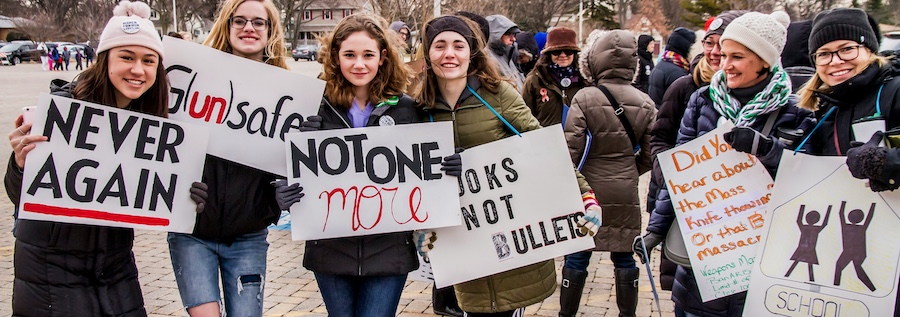
[In a world that seems increasingly chaotic and broken, many of us feel helpless and afraid. We may question what we can do to make a difference. To build collective courage, in this space we will share examples of how individual members of GEC are practicing the way of Jesus, in private action or in the public arena. How might you find inspiration and hope in the small steps others are taking?]
"I attended the Seven Day gatherings beginning on October Eighth on the steps of the State Capitol building. Five hundred clergy had signed a letter asking that Minnesota pass a ban on Assault Weapons and High Capacity Magazines. Before the prayers, seventy of us proceeded into the building to present this letter to Governor Waltz’s representative. The letter was read and handed over. Then a statement from our own Bishop Craig Loya was read, which said in part 'Any refusal to enact simple and sensible gun control now is accepting the murder of innocent children as a normal part of our society. Such an acceptance would be a moral failure of the greatest magnitude.' By this morning our 500 signatures on this letter had increased to 935 clergy from 70 counties across the State.
Most of the gatherings included a period of silent prayer for 120 seconds, the amount of time the shooting at Annunciation School lasted. As I prayed the Silence I tried to imagine how long it must have felt for those inside the worship who were sheltering and terrified, hoping it would stop.
We realize that many other things must happen in terms of equity and inclusion and care for the least able to care for themselves before we find a solution. And isn’t that what the Way of Jesus asks of us. To care, and care, and care with prayer and with action that joins God in the project of healing the world with resilient, embodied, and joyful love!"
—Gretchen P
Using Money to Heal and Restore
Oct. 23, 2025 12:41 Filed in: Commentaries

Friends,
A mental game I like to play sometimes goes like this: If someone gave you $15,000, no strings attached, what would you do with it?
$15k isn't enough to buy a brand new car or finish your basement. But it's more than enough to take a fabulous vacation. For many of us, $15,000 would make a huge dent in our credit card debt, or refill an emergency fund. If you're on a limited income or looking for work, if you aren't being paid during the shutdown, that amount of money would make a massive impact in your ability to sleep at night. Many in our community would be better able to meet basic needs—to eat and pay for childcare and medication and rent—with that amount of money.
So, if the wealth fairy visited you with a stack of cash: What would you do with it? This hypothetical gift game challenges my values about how I tend to my family's needs and long-term interests, as I become more aware of the needs of my neighbors and community.
Last Sunday, the Rev. Larry Bussey preached, sharing a story of his own work to use his money as a sacramental tool to help heal and restore issues he cares about. He wrestled with the texts from Jeremiah and from Luke, and wove in his experience at the No Kings rally last Saturday. You can listen to the sermon here.
All of us have financial stresses and obligations, and some of them are very different from others. That's why you'll see on our pledge card this year a box to acknowledge "I'm giving more this year knowing there are many in our faith community that have fewer financial resources at this time." If you're struggling this year, we want you to know that this community has your back. And if you aren't struggling, perhaps your gift can help bridge the gap for someone else.
With love,
Susan+
Persistent Gentle Kindness
Oct. 18, 2025 10:43 Filed in: Commentaries

Beloved in Christ,
When I was seven, I was hospitalized several times in a short period for a respiratory illness that was much more serious than I had any ability to appreciate at the time. I remember very little from those days in the hospital. I remember the image of my grandmother sitting in a chair next to my bed, and I remember when Pastor Van from First Lutheran Church came to visit. I found it supremely odd that the church pastor would stop by the hospital to see me. I don’t remember a single word he said. I don’t even remember what he looked like. But I remember him being there. His presence, and my grandmother’s steady kindness, have left large and lasting imprints on the shape of my whole life. Two ordinary moments, with ordinary people, exercising ordinary kindness, are among the most durable memories I carry with me.
In these present days, when there is so much pain, and fear, and anger swirling in all directions and from all sides, it is so easy to get hooked into thinking that being a force for good and hope must involve big actions fueled by righteous anger. When I find myself going to that place, as I often do, when I get tricked into thinking following Jesus is about trying to win a battle rather than participate in God’s project to heal the world with love, it’s helpful to remember that my grandmother and Pastor Van helped shape my whole life by small, almost forgettable acts of gentle kindness.
In our reading from 2 Timothy this week, the writer urges us to “be persistent whether the time is favorable or unfavorable.” If it feels like the world is falling apart, it’s because it is, and it nearly ever has been. Our work is not to stop it from falling apart. Our work is not to be the most right and impose a new order on the falling apart world. Our job, when the weather is good and when it is very bad, is to be persistent in gentle kindness. Our job is to keep showing up in our very small communities that are dedicated to showing up as God’s gentle kindness in the world. Jesus did not take the falling apart world by angry force. He met it, as he meets it still, with persistent gentle kindness. And the resurrection we affirm as real each and every Sunday settles forever that God’s persistent gentle kindness is the most powerful force in the universe.
The kingdom of God is not ours to engineer or to impose. Rather, just as the Lake Superior tributaries have carved out the canyons that hallow and transform yet another part of our beautiful Minnesota, so our persistent gentle kindness, through small communities over a long arc, when caught up in the resurrection’s power, will flood the whole earth, and make all things new through the glorious power of love.
Grace and Peace,
The Right Reverend Craig Loya
Bishop X
Episcopal Church in Minnesota
Reimagine a Hopeful Future
Oct. 14, 2025 14:31 Filed in: Commentaries

Friends,
Last week, I preached about the practice of 'Reimagine.' We dug into the hard good news the prophet Jeremiah offered to his country-people in exile, and the hard good news Jesus offers in seeing the faithfulness of the Samaritan healed of leprosy. In both those stories, God is in the business of helping us reimagine things for a hopeful future. God asks that we do the long, practical, one day at a time work of trusting that God’s triumph over death is more real than the hardships we face. You can listen to the sermon here.
Last week, we did more of that reimagining at our Wednesday evening session. We talked about the story in which Jesus notices the faithfulness of the woman at the Temple who gives her last two copper coins, "all she had to live on." Many of us have been taught that Jesus held her up as a model to emulate. Put on your 'reimagining' hat here with me for a moment: What if Jesus was lamenting her gift? What if Jesus was pointing out the hypocrisy of a system in which the wealthy could easily give large sums out of their abundance, while expecting sacrificial gifts from those most in need? Read that story -- Mark 12:38-44 -- and then read the prayer below if you want to go deeper, and listen in to our conversation here.
With love,
Susan+
A Prayer to Help us Reimagine
Jesus of Nazareth,
In scripture we hear of a woman who gave her last coin away.
You pointed her out, but you did not say, “Go and do likewise.”
So we cannot help but wonder—did you point her out to ask,
“Why does this one have so little when others have so much?”
Did you point her out to help us see the injustice that led to her suffering?
Maybe.
So today, for her, and for you, and for every person who cannot afford to give to God
And put food on the table, we offer our gifts.
We pray that you would use them for your good.
Right what is wrong.
Balance the systems of injustice.
Use these gifts to build the world that we can only imagine
But you can bring forth.
In hope we pray,
Amen.
Civic Discourse
Oct. 14, 2025 13:18 Filed in: Commentaries

[In a world that seems increasingly chaotic and broken, many of us feel helpless and afraid. We may question what we can do to make a difference. To build collective courage, in this space we will share examples of how individual members of GEC are practicing the way of Jesus, in private action or in the public arena. How might you find inspiration and hope in the small steps others are taking?]
"My wife Betsy S and I recently decided to host a meet and greet at our home for Mayor Jacob Frey. I saw that Kathy M L is hosting a meet and greet for mayoral candidate Dwayne Davis. I’m sure that regardless of who we support, we all believe practicing Jesus' way of defiant, embodied, joyful love in our city means we try to create spaces for respectful civic discourse and engagement. Defiant and perfect love casts out all fear and rebukes resignation and defeatism."—submitted by Mark F
We Have Been Set Free
Oct. 10, 2025 07:40 Filed in: Commentaries

Beloved in Christ,
Like most people, I am at my worst when I believe I have something to prove. When I think I need to prove to others that I am smart enough, or good enough, or right enough, or likeable enough, or worthy of love, or whatever, then everyone who is different than me is a threat, every criticism is an attack, every disagreement is a battle I have to win. That gnawing feeling we all carry somewhere inside that we are deficient in some way is called shame, and when we live from this place, our whole life feels like a fight.
Our reading from 2 Timothy this week urges us to stand before God as “a worker who has no need to be ashamed.” The heart of the gospel of Jesus Christ is that we are loved, immeasurably and unimaginably, not because we have proven ourselves worthy, but simply because we have been created by the God who is infinite love.
To be sure, we are called to act morally, to live righteously, and to reflect holiness. But not in order to convince God and others that we are good enough. Our actions, like the Samaritan leper’s gratitude in this week’s gospel, are a response to what God has already done for us. We don’t act in order to win our freedom, we act because we have already been set free.
Our current culture and politics frames life as a binary battlefield with only winners and losers. It secures that field by constantly poking at the shame inside us. You don’t have enough. You haven’t done enough. The world, or the nation, or the church, or your family, would be fine if you just tried harder and did more. It’s all a lie. Following Jesus is about subverting that lie with the gospel of God’s limitless love.
If you are discouraged by the state of our nation, if you want to be a force for healing and good, then instead of just fighting harder in a world designed to lock us in perpetual warfare, try standing “before God as one approved by him. A worker who has no need to be ashamed.” Try starting each day, each conversation, each encounter in that place.
When we set down the struggle to secure some imagined freedom, and accept that we have already been set free, we find, finally, the power to join God in setting the whole word free with irresistible joy, with unshakable hope, and with revolutionary love.
Grace and Peace,
The Right Reverend Craig Loya
Bishop X
Episcopal Church in Minnesota
Faith Grows Like a Mustard Seed
Oct. 09, 2025 11:59 Filed in: Commentaries

Friends,
I hope you'll join us to reflect on the practice 'REIMAGINE' as part of Our Money Story. Scroll down for a brief prayer to start you thinking.
On Sunday, our deacon postulant / intern Huldah Niles preached on Jesus' words about faith being like a mustard seed. She talked about what a process of growing in faith might look like. You can listen to the sermon here.
In Love,
Susan+
A Prayer to Help us Reimagine
Jesus of Nazareth,
In scripture we hear of a woman who gave her last coin away.
You pointed her out, but you did not say, “Go and do likewise.”
So we cannot help but wonder—did you point her out to ask,
“Why does this one have so little when others have so much?”
Did you point her out to help us see the injustice that led to her suffering?
Maybe.
So today, for her, and for you, and for every person who cannot afford to give to God
And put food on the table, we offer our gifts.
We pray that you would use them for your good.
Right what is wrong.
Balance the systems of injustice.
Use these gifts to build the world that we can only imagine
But you can bring forth.
In hope we pray,
Amen.
The Way of Jesus Amid Authoritarianism
Oct. 01, 2025 08:18 Filed in: Commentaries
Friends,
Yesterday, my sermon focused on the surprising meaning of a 6th-Century BCE scrap of real estate history -- the prophet Jeremiah, after decades of prophesying doom, releases his hold on that story just as the doom is about to come to pass. He lets go of that story and claims hope for the future, with prophetic performance art: the practical action of buying a field. You can listen to the sermon here.
This story has direct relevance to what I hear from so many of you and feel deeply myself -- a sense of despair that we are powerless to stop the authoritarian government we see now in the United States. I shared research from Erica Chenoweth, linked below, to offer hope: it takes fewer people than you might think, acting together, to help the silent majority withdraw its cooperation from an authoritarian regime.
Jeremiah's claim to the deeper story -- that God's dream of shalom is greater than all empires and authoritarians -- is what we stand on today, too. And because we trust that God's love prevails, we can offer our own performance art for God's kingdom, where we are, with what we have.
So: what story do you need to release in order to trust that God's vision of shalom will prevail? How could you practice the way of Jesus in this historic moment? What's the (metaphorical) field you can buy, where you are, with what you have?
With love,
Susan+
Dig into Erica Chenoweth's Research
Here are a few links to get you started:
Video: The Science of Protest, on the Civic Forum
Podcast: Why Protest Works, on We Can Do Hard Things
Website: ericachenoweth.com/research
Canvassing as Spiritual Practice?
Oct. 01, 2025 07:53 Filed in: Commentaries | Spiritual Practice

[In a world that seems increasingly chaotic and broken, many of us feel helpless and afraid. We may question what we can do to make a difference. To build collective courage, in this space we will share examples of how individual members of GEC are practicing the way of Jesus, in private action or in the public arena. How might you find inspiration and hope in the small steps others are taking?]
After hearing Susan’s moving sermon last Sunday, I went to prepare a train-the-trainer for canvass leaders. One of the most visible ways I put my faith into action is through my involvement in local politics, this year focused on the mayoral race in Minneapolis. I am co-organizing a group of everyday workers, parents, musicians, and more who are committed to knocking 10,000 doors for Omar Fateh because we share a vision for a city leader who walks the talk when it comes to advocating for affordable and quality education, creating lasting support systems for our unhoused neighbors, refusing to cooperate with the detainment of our immigrant community members, collaborating with colleagues including fellow candidates DeWayne Davis and Jazz Hampton, and so much more.
I wasn’t always interested in canvassing. Knocking on people’s doors to talk to strangers requires the same kind of oomph that performance art does! And I had a whole list of things I could use to excuse myself from participating. But then a friend invited me to door knock as a spiritual practice. It turns out that to leave the house, dressed in a campaign t-shirt with multiple buttons and holding more flyers than fit comfortably in my hand, to knock on someone’s door whom I don't know and ask them what they really care about is one of the most faithful things I have done. I perform my concerned neighbor part, I humble myself as a stranger, and I risk rejection and annoyance and bigotry in order to actually practice being a neighbor who listens to and connects with other neighbors–you and I both live here, how are we going to live here together?