
Money
Using Money to Heal and Restore
Oct. 23, 2025 12:41 Filed in: Commentaries
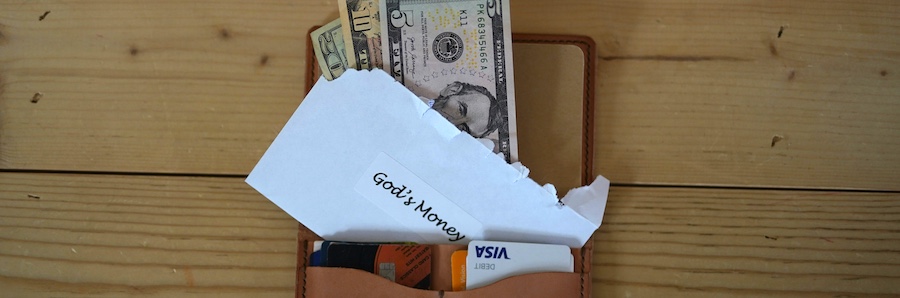
Friends,
A mental game I like to play sometimes goes like this: If someone gave you $15,000, no strings attached, what would you do with it?
$15k isn't enough to buy a brand new car or finish your basement. But it's more than enough to take a fabulous vacation. For many of us, $15,000 would make a huge dent in our credit card debt, or refill an emergency fund. If you're on a limited income or looking for work, if you aren't being paid during the shutdown, that amount of money would make a massive impact in your ability to sleep at night. Many in our community would be better able to meet basic needs—to eat and pay for childcare and medication and rent—with that amount of money.
So, if the wealth fairy visited you with a stack of cash: What would you do with it? This hypothetical gift game challenges my values about how I tend to my family's needs and long-term interests, as I become more aware of the needs of my neighbors and community.
Last Sunday, the Rev. Larry Bussey preached, sharing a story of his own work to use his money as a sacramental tool to help heal and restore issues he cares about. He wrestled with the texts from Jeremiah and from Luke, and wove in his experience at the No Kings rally last Saturday. You can listen to the sermon here.
All of us have financial stresses and obligations, and some of them are very different from others. That's why you'll see on our pledge card this year a box to acknowledge "I'm giving more this year knowing there are many in our faith community that have fewer financial resources at this time." If you're struggling this year, we want you to know that this community has your back. And if you aren't struggling, perhaps your gift can help bridge the gap for someone else.
With love,
Susan+
God Wants to Help Reshape our Stories
Sep. 11, 2025 14:20 Filed in: Commentaries
 Friends,
 Last Sunday, I preached about pottery, about the fact that, until it's fired, the clay is infinitely re-shapeable. Our Scripture texts spoke of God as the potter, as Jesus invited people to reshape their stories, to rewrite who they could become. These earliest Christians had to overcome broken stories defined by enslaver/enslaved relationships, as they moved toward healthy stories of respectful friendships. God can do that reshaping work with us and with our stories, if we pause to remember what stories we've been telling ourselves. You can listen to the sermon here.
Money is one thing about which we tell ourselves a lot of—mostly unconscious—stories. And as Grace Episcopal Church looks to discern who God is calling us to be in the coming years, we are going to need to be able to remember and perhaps release some of our stories about money. Read on below to connect with reflections we're inviting everyone to engage this week and next, unearthing the story of your relationship with money.
We will spend the coming weeks engaging in four practices: Remember, Release, Reimagine, and Restore.
This season will be about asking: What stories about money have we learned and told, as individuals and as a congregation? Stories of scarcity, abundance, fear, joy, misuse, regret, shame, anxiety, deserving, grace, service, generosity, freedom? What parts of those stories are we still telling ourselves? If we’re willing to unearth these stories, we could let God heal them.
This is not about telling each other how much more you should be giving or what your money story should be. We hope it will be a season of openness, curiosity and healing, remembering the best of who we are and asking God to restore us into who we are called to be.
As you work through these spiritual practices, there will be opportunities to gather and talk with others. All the details are at the link below, and I hope you’ll join us for some or all of those gatherings.
With love,
Susan+